NASA EPIC Camera Captures Stunning Earth Images
NASA's EPIC camera aboard the DSCOVR spacecraft has captured a series of breathtaking full-disk images of Earth from a million miles away, highlighting
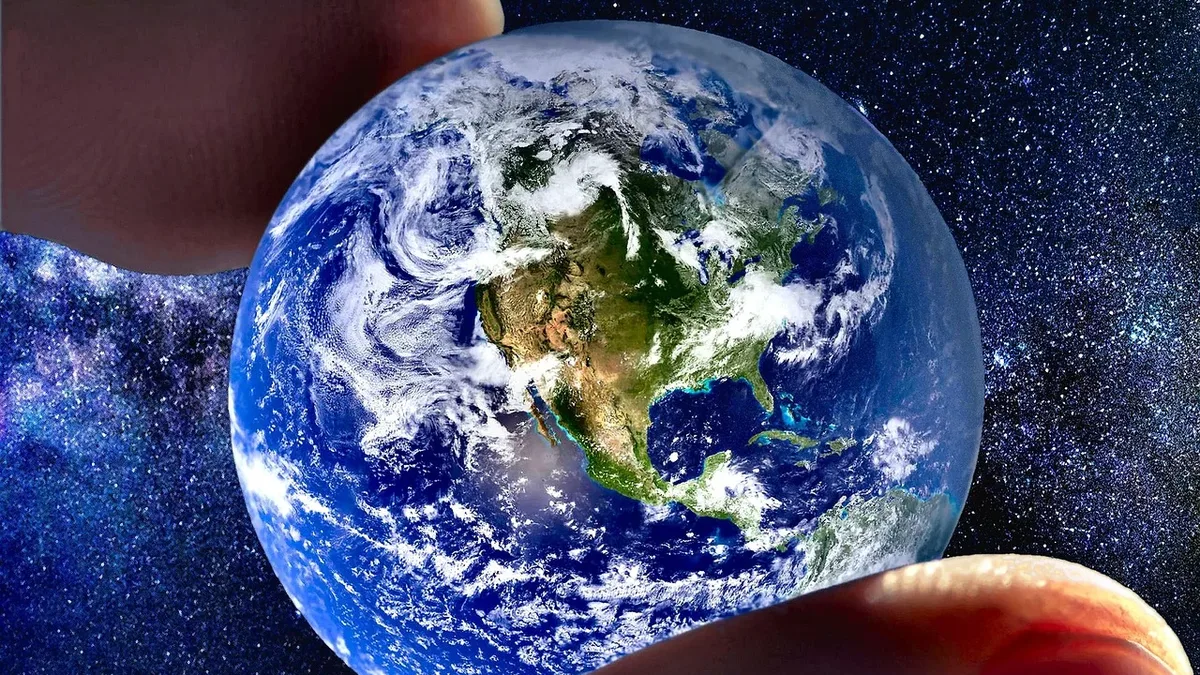
NASA's EPIC camera has captured stunning images of Earth from the Sun-Earth L1 Lagrange point, about 1.6 million kilometers away. The Earth Polychromatic Imaging Camera (EPIC) aboard the Deep Space Climate Observatory (DSCOVR) photographs the planet's sunlit face approximately every two hours.
EPIC photographed Earth at the December and June solstices and the March and September equinoxes. This series illustrates how Earth's axial tilt alters the visibility of continents and polar regions throughout the year.
Camera Details
EPIC's technical specifications allow it to capture high-quality images of Earth. A 30-centimetre Cassegrain telescope feeds light to a 2048 × 2048-pixel CCD sensor inside the camera. The instrument operates across 10 spectral channels, covering wavelengths from 317 to 780 nanometers. Its observation cycle takes roughly 60 to 100 minutes to scan the entire sunlit hemisphere.
Image Capture
The seasonal images reveal dramatic shifts in perspective. The photograph from December 21, 2023, shows South America close to the center of Earth's disk, with much of Antarctica visible at the bottom. In contrast, the image from June 20, 2024, places North America closer to the center, reveals Arctic sea ice, and leaves Antarctica completely out of view. The images from March 19 and September 22 show intermediate positions between these solstice extremes.
| Date | Key Visible Features |
|---|---|
| December 21, 2023 | South America centered, Antarctica largely visible |
| June 20, 2024 | North America centered, Arctic sea ice visible, Antarctica not in view |
| March 19, 2024 | Intermediate position between solstices |
| September 22, 2024 | Intermediate position between solstices |
Expert Insight
Award-winning astrophotographer Soumyadeep Mukherjee, who holds a doctorate in Linguistics, shared his perspective on such imagery. His work spans nightscape, deep sky, solar, lunar, and optical phenomenon photography. Mukherjee is also a photography educator who has conducted numerous workshops. His photographs have been featured in over 40 books and magazines, including Astronomy, BBC Sky at Night, and Sky & Telescope, and on websites for National Geographic, NASA, and Forbes. He was the first Indian to win the 'Astronomy Photographer of the Year' award in a major category.
Mukherjee emphasized the fundamental requirement for all photographers, simply stating, "Clear skies!" His work shows the connection between technical precision and artistic vision, a principle evident in EPIC's distant captures. The camera continues its vigil, documenting the planet's ever-changing face every few hours from its unique vantage point in deep space.