ESA Cebreros Telescope Captures First Light of Dumbbell
ESA's new 50cm Cebreros Telescope has captured its first astronomical image, targeting the Dumbbell Nebula (M27) on the night of September 3-4, 2026.
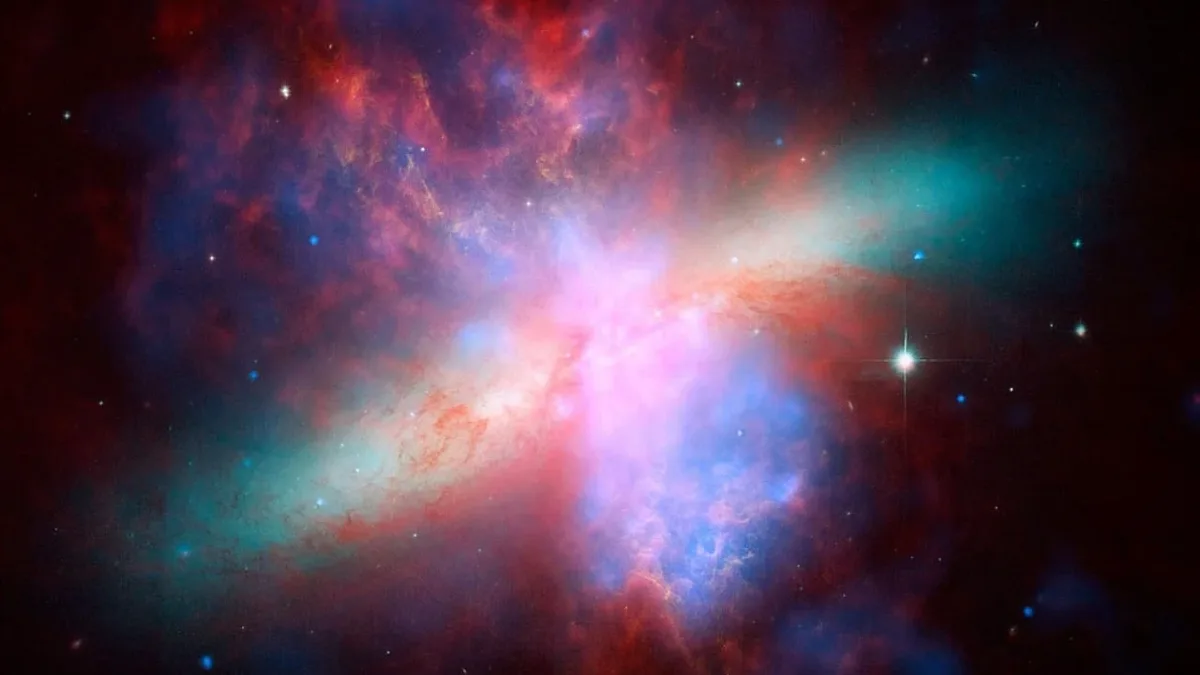
The CESAR Cebreros Telescope has achieved first light, capturing a detailed image of the Dumbbell Nebula through a multi-filter imaging process. The observing session for this inaugural image ran from approximately 17:00 to 02:00 UTC on the night of September 3-4, 2026. A CMOS camera, cooled to -15°C, collected the data.
Calibration frames-including flat, dark, and bias frames-were gathered alongside the main exposures. The team photographed the target, also known as Messier 27 or M27, through separate luminance, red, green, and blue filters. This first-light observation is part of the commissioning work for the telescope, designated the CCT.
The Dumbbell Nebula is a planetary nebula and one of the brighter objects in its class. Its strong emission features make it an ideal target for testing color imaging capabilities. The field surrounding M27 is also rich with stars, which helps technicians assess optical performance during the commissioning phase.
Telescope specifications and systems
Located at ESA's Deep Space Tracking Station near Cebreros in Ávila, Spain, the telescope is a high-precision instrument built for education. It operates separately from the station's primary spacecraft communication systems. The optical assembly is a classic Cassegrain system with a parabolic primary mirror and a hyperbolic secondary, providing a 5-meter focal length.
The telescope is housed within an automated 3.5-meter dome. Its mount is a highly precise equatorial fork type, with high-precision drive systems on both axes capable of tracking objects at non-sidereal rates. The CESAR control system manages the telescope, dome, filter wheel, focus, and camera as an integrated unit.
| Specification | Detail |
|---|---|
| Primary Mirror Diameter | 50 cm |
| Optical System | f/10 Cassegrain |
| Focal Length | 5 m |
| Pointing Accuracy | < 0.5 arcseconds |
| Tracking Resolution | < 0.3 arcseconds |
| Dome | Automated 3.5m |
| Mount Type | Equatorial fork |
The wider CESAR infrastructure includes a control center for remote observation management and data transfer. The relative pointing accuracy is under 0.5 arcseconds, while the closed-loop servo system provides tracking resolution below 0.3 arcseconds.
Education and outreach integration
ESA plans to bring the telescope into its formal education programme during the first half of 2027. Starting in early 2027, schools and educational institutions will be able to plan observations and work with data from the instrument. Students will follow the complete observing process, from target selection and planning through to data analysis.
They will learn to select appropriate filters and exposure settings. Participants will examine both raw and calibrated data, comparing images from different filters. The CESAR programme uses astronomy and space science to support classroom activities, including school projects and teacher training. ESA runs the programme in collaboration with Spain’s National Institute for Aerospace Technology (INTA) and Systems Engineering for Defense of Spain (ISDEFE).
Contributor background
The imaging work highlights the involvement of award-winning astrophotographer Soumyadeep Mukherjee. An educator who has conducted numerous workshops, his photographic expertise spans nightscapes, deep-sky objects, solar, lunar, and optical phenomena. His work has appeared in over 40 books and magazines, including Astronomy, BBC Sky at Night, and Sky & Telescope, and on websites for National Geographic, NASA, and Forbes.
Mukherjee, who holds a doctorate in Linguistics, was the first Indian to win the 'Astronomy Photographer of the Year' award in a major category. On the successful first light, he simply said, "Clear skies!"
Starting in early 2027, schools and educational institutions will be able to plan observations and work with data from the telescope.