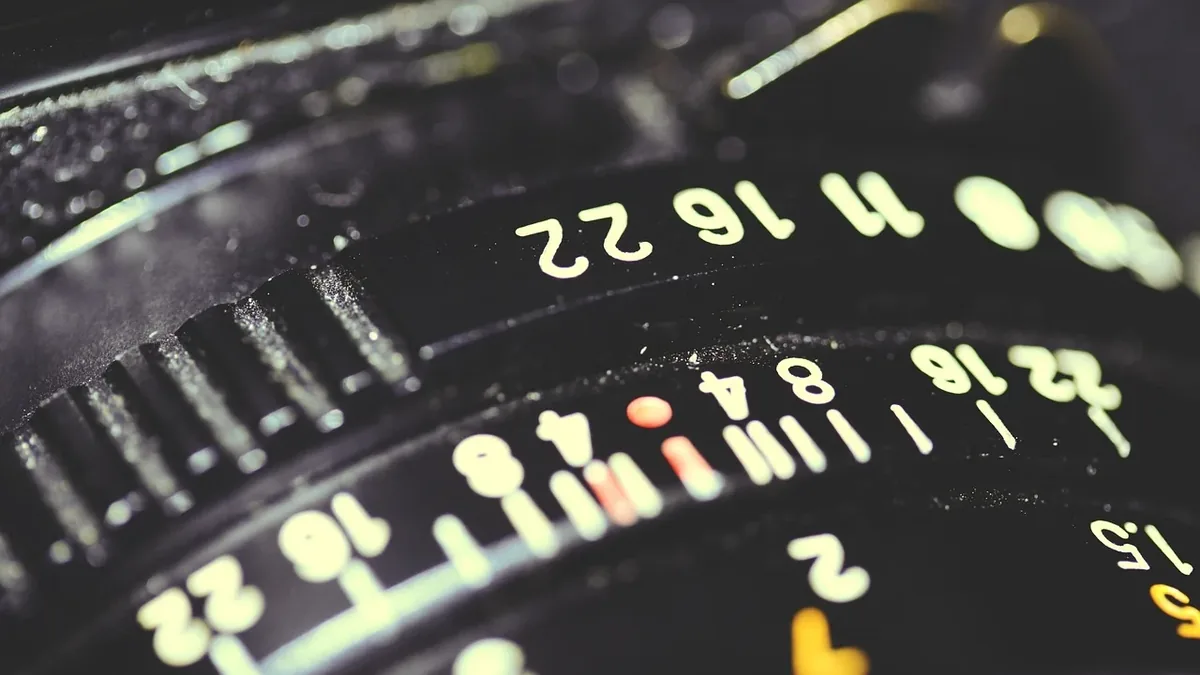
Exposure Triangle
| Country of origin | Conceptual origin in photography |
|---|---|
| First created | Mid-19th century (concept formalized in 20th century) |
| Original use | To conceptualize the three fundamental controls for camera exposure |
| Core variables | Aperture, Shutter Speed, ISO |
| Governs | The total light captured and its artistic rendering |
| Interdependence | Adjusting one requires adjustment of another for equivalent exposure |
| Primary trade-offs | Depth of field vs motion blur vs image noise |
Origin and history
The conceptual framework known as the Exposure Triangle is a pedagogical model originating from the practice of photography, with its formalized presentation emerging in the late 20th century. It is not tied to a specific country but developed globally as a standard method for teaching exposure in photography textbooks and manuals. The three components it describes, aperture, shutter speed, and ISO, have existed since the advent of chemical-based film photography in the 19th century. However, the explicit triangular diagram and the term "Exposure Triangle" itself became widely adopted with the rise of consumer digital photography and dedicated photography education. This model provided a systematic way to explain the trade-offs between these three settings to new photographers moving from automatic to manual camera controls. Its history is therefore one of educational synthesis rather than technological invention, consolidating long-understood photographic principles into a single, memorable visual concept.
What it is for
The Exposure Triangle is a conceptual model used to understand and manually control the brightness, or exposure, of a photographic image. Its primary purpose is to illustrate the interdependent relationship between three core camera settings: lens aperture, shutter speed, and ISO sensitivity. By adjusting any one of these three variables, a photographer must compensate with one or both of the others to maintain a consistent level of image brightness. Beyond mere exposure, the model crucially demonstrates how each setting also controls a distinct visual characteristic of the final photograph. Aperture primarily affects depth of field, shutter speed governs the depiction of motion, and ISO influences the amount of digital noise or film grain. Therefore, the Triangle is for making intentional creative choices, allowing a photographer to prioritize a blurred background, a frozen action, or a cleaner image, while still achieving correct exposure. It serves as the fundamental decision-making framework for shooting in manual or semi-automatic camera modes.
Pros and cons
A primary advantage of the Exposure Triangle model is its effectiveness as a teaching tool, providing beginners with a clear, visual structure for understanding an otherwise abstract interplay of settings. It empowers photographers to move beyond automatic mode and make deliberate creative choices by showing the direct consequences of adjusting aperture, shutter speed, or ISO. However, a significant con is that the model can be misinterpreted as a rigid rule, leading beginners to believe all three settings must be constantly adjusted in unison rather than understanding that one setting is often chosen as a creative priority. A common mistake is becoming overly focused on balancing the triangle for technical exposure while neglecting the more important artistic goals of a scene, such as composition or moment. Furthermore, the model simplifies complex realities, as it does not adequately account for the role of modern in-camera metering, exposure compensation, or the use of neutral density filters. Some photographers regret an over-reliance on the Triangle early on, as it can delay the development of an intuitive sense of exposure where the camera is adjusted fluidly based on the desired visual outcome rather than a mental diagram.
Who it suits
This model is ideally suited for beginner and intermediate photographers who are transitioning from using their camera's fully automatic mode to manual or priority modes. It is particularly valuable for hobbyists and students in introductory photography courses who require a structured, memorable system to demystify camera controls. The Exposure Triangle also suits technically-minded learners who appreciate logical, diagrammatic explanations of how different mechanisms interact to produce a final result. However, it is less necessary for experienced photographers who have internalized the relationships and operate from intuition, or for those who work exclusively in controlled studio environments with consistent lighting. While advanced practitioners understand the principles it represents, they often move beyond the literal triangle framework, considering exposure as part of a broader set of tools including histogram analysis and dynamic range management. Ultimately, it is a foundational stepping stone for anyone seeking systematic control over their photographic process.
Latest Exposure Triangle news
Latest reporting
The Math Behind Erasing Crowds with Long Exposures
A technical analysis explains the precise conditions under which moving people vanish in long-exposure photographs, focusing on dwell time and pixel
Daguerre's 1838 Photo Captures First Person
Louis Daguerre's 1838 daguerreotype of a Paris boulevard, taken during a minutes-long exposure, accidentally recorded a man having his boots shined...