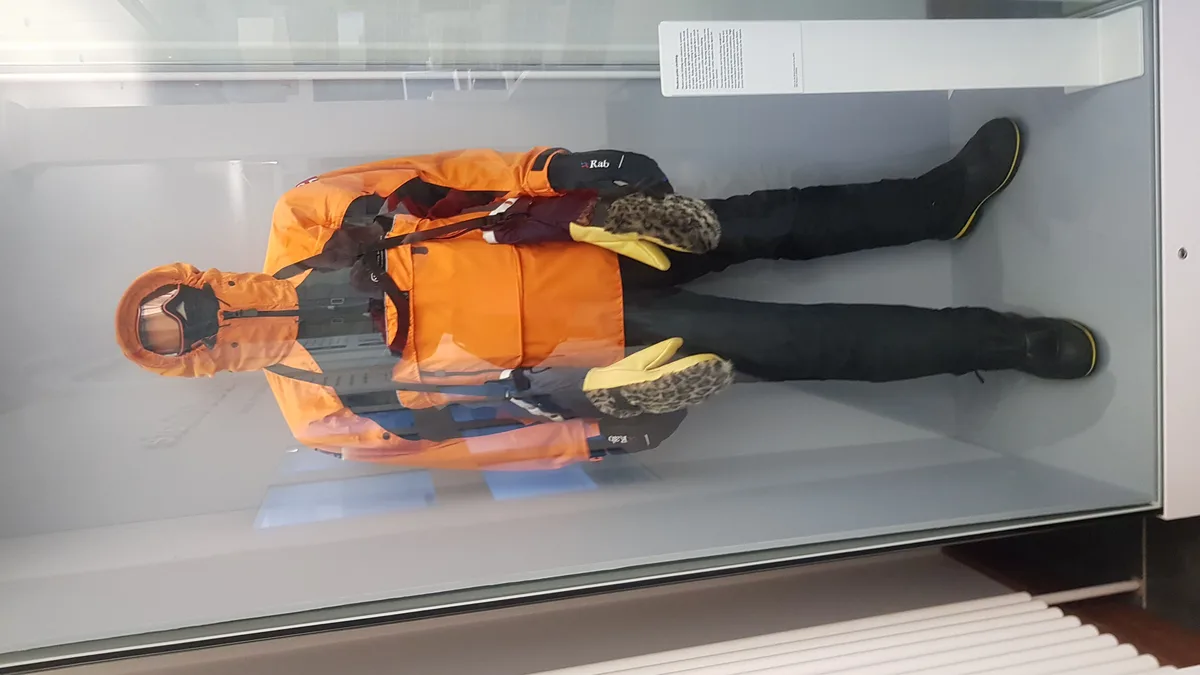
Batteries In Cold Weather
| Camera model | Nikon F2 |
|---|---|
| Original use | Professional 35mm film photography |
| First created | 1971 |
| Battery type | Two 1.5V silver oxide batteries (type S-76 or equivalent) |
| Battery location | Inside the camera body, beneath the removable pentaprism |
| Cold weather performance | Prone to voltage drop and failure in sub-zero temperatures |
| Common workaround | Keep camera under coat or use body heat to warm batteries |
Origin and history
The challenge of camera batteries in cold weather originates from the fundamental chemical and physical properties of lithium-ion batteries, which became the standard for digital photography in the late 1990s. This operational constraint became widely documented and discussed among professional photographers and expedition teams in the early 2000s, particularly those working in Arctic, Antarctic, and high-altitude environments. The issue is not tied to a specific country but emerged globally as photographers pushed the limits of digital equipment in extreme conditions. Historical accounts from polar explorers and mountaineers prior to the digital era also note similar, though chemically distinct, challenges with battery-powered equipment like light meters and motor drives in film cameras. The collective experience from these fields established the core knowledge base regarding battery performance decline in sub-freezing temperatures. This body of practical knowledge has since become essential for any photographer working in winter landscapes or cold climates.
What it is designed for
This topic is designed to inform photographers of the technical limitations and failure modes of photographic equipment in low-temperature environments. Its purpose is to provide a factual framework for understanding why battery capacity and voltage drop significantly when exposed to cold, often leading to sudden camera shutdown. It addresses the need for proactive power management to ensure camera operation during critical shoots in winter, snow sports, alpine settings, or polar regions. The information serves as a crucial planning component for expeditions, wildlife photography in cold seasons, and outdoor event coverage in winter. It is fundamentally a guide for risk mitigation against power loss, which can result in missed photographic opportunities or the complete failure of a paid assignment. The topic also encompasses the selection of compatible equipment and accessories specifically engineered to perform more reliably under these duress conditions.
Development and versions
The development of solutions for battery performance in cold weather has progressed through both accessory innovation and battery chemistry refinements. Early mitigation strategies primarily involved simple insulation, such as keeping spare batteries in interior pockets and using chemical hand warmers wrapped around camera bodies. The first dedicated commercial products included insulated battery pouches and neoprene camera wraps, which remain common. On the technological side, manufacturers began offering "cold weather" or "extreme condition" battery versions for select professional camera models, often featuring slightly different internal chemistry or insulation. The development of external battery packs, which can be kept warm inside a coat and connected via a cable, provided another significant step. More recently, some mirrorless camera systems have incorporated USB-C power delivery, allowing connection to large-capacity power banks that can also be insulated. This evolution reflects a shift from purely behavioral adaptations to integrated system solutions.
Best camera for Batteries In Cold Weather
No single camera model is universally best, but cameras with specific features offer distinct advantages. Traditional DSLR designs with larger camera bodies often have more thermal mass and can retain operational heat slightly longer than compact mirrorless cameras. However, many high-end mirrorless cameras now offer enhanced power management and compatibility with external power sources. Cameras that accept battery grips are advantageous, as they allow the use of two batteries simultaneously, increasing total available power and providing redundancy. Crucially, cameras that maintain a mechanical shutter and optical viewfinder, rather than solely an electronic viewfinder, can conserve significant power when not actively exposing an image. Professional-grade cameras from several manufacturers are typically built with more robust seals and components tested to lower operating temperatures. The optimal choice is often a camera system for which high-capacity or cold-specified battery options and external power solutions are readily available and proven in field reports.
Camera settings for Batteries In Cold Weather
Conservative power management settings are essential to extend shooting time. Begin by disabling power-hungry features like constant sensor cleaning, Wi-Fi, Bluetooth, and GPS, as these drain the battery continuously. Reduce the brightness of the LCD screen to its minimum usable level and shorten the automatic display review time after taking a shot. If your camera has an electronic viewfinder, set it to a lower refresh rate or use the optical viewfinder if available. Switch the camera to airplane mode to disable all wireless communications entirely. Use single autofocus rather than continuous servo mode, as the latter engages the motor and systems more frequently. Avoid chaining together long bursts of continuous high-speed shooting, as this generates significant current draw that can precipitously drop voltage in a cold battery.
How to photograph Batteries In Cold Weather
The primary subject is the environmental condition's effect on equipment, so the photograph often documents the setting and the mitigation techniques. Compose shots that show the camera in situ within the cold environment, such as on a tripod in snow, with visible breath or frost, to establish context. Use a second camera or a smartphone to document your power management setup, like spare batteries stored in an interior pocket or a camera wrapped with an insulating cover. Macro photography can effectively illustrate condensation forming on equipment when moving between temperature extremes. To demonstrate the consequence, a compelling image could be a camera's LCD displaying a sudden low-battery warning amidst an otherwise perfect snowy landscape. Time-lapse sequences taken from a fixed position can show the progression of light and weather while the camera continues to operate, serving as proof of a successful strategy. Always ensure your backup camera or power solution is ready to capture these meta moments of photographic process.
Pros and cons
The primary pro of understanding this topic is the ability to execute a reliable shoot in conditions that would otherwise cause equipment failure, enabling unique photography inaccessible to the unprepared. A significant con is the added cost, weight, and complexity of necessary backup systems, including multiple spare batteries, power banks, and insulating accessories. Photographers often regret not testing their entire cold-weather kit, including all cables and external packs, in a simulated environment before a critical trip, as failures often occur at connection points. The most common mistake is assuming a battery's indicated charge level at room temperature will translate to equivalent performance in the cold, leading to underestimation of needs. Another frequent error is bringing cold batteries inside to warm up without sealing them in a plastic bag first, which leads to condensation and potential short-circuiting. This discipline suits meticulous planners but frustrates those who prefer minimal, spontaneous gear setups.
Who it suits
This knowledge is essential for professional outdoor and adventure photographers whose assignments depend on guaranteed camera operation in alpine, polar, or winter sports environments. It suits serious amateur photographers dedicated to landscape or wildlife photography in cold seasons, who invest time in preparation to capture specific conditions. Expedition team members, researchers, and documentarians working in Arctic or Antarctic regions require this information as a fundamental aspect of their operational safety and success. Winter event photographers, such as those covering dog sled races, ski competitions, or ice festivals, also benefit significantly from these protocols. It is less critical for casual photographers making brief excursions into the cold, though basic principles like keeping spares warm still apply. Ultimately, it suits any photographer who views environmental challenges as technical problems to be solved rather than as barriers to their work.
Latest Batteries In Cold Weather news
Latest reporting
OM System Updates 14-42mm Kit Lens with Weather Sealing
OM System has announced an updated version of its 14-42mm F3.5-5.6 III kit zoom lens, adding IPX1 weather resistance and a closer minimum focusing

OM System PEN Review: A Superior Successor to the PEN-F
The OM System PEN, priced at $999, is a weather-sealed, retro-styled camera with in-body stabilization, an electronic viewfinder, and advanced

OM System PEN Launches as Weather-Sealed Everyday Camera
OM System has launched the PEN, a new compact mirrorless camera with a 20MP sensor, in-body stabilization, and weather-sealing.

Viltrox AF 35mm F1.2 LAB N FE review - excellent value and sharp - is this the lens of your dreams?
The Viltrox AF 35mm F1.2 LAB N FE lens is a full-frame lens designed for Sony E and Nikon Z mount cameras. It features a robust metal construction...