Documentary
| Subject | Documentary (Genre) |
|---|---|
| Country of origin | United States |
| First created | 1920s |
| Original use | To document and inform about reality |
| Typical runtime | Short to feature-length |
| Primary format | Film or video |
| Narrative style | Expository, observational, or participatory |
| Common subjects | Historical events, social issues, nature, biography |
Origin and history
The documentary genre originates from the earliest days of cinema in the late 19th and early 20th centuries, with its foundational principles established in Europe and North America. The term itself is attributed to Scottish filmmaker John Grierson in the 1920s, who used it to describe Robert Flaherty's film "Moana." Early examples are the actuality films of the Lumière brothers in France during the 1890s, which presented short, unedited slices of life. The genre evolved through the 1920s and 1930s with the rise of poetic documentary styles and the later development of more polemical forms like the British Documentary Movement. The introduction of synchronized sound, lighter cameras, and later portable video technology profoundly expanded its scope and accessibility. Throughout the mid-20th century, documentary was heavily utilized for state propaganda and educational purposes, while also serving as a tool for direct cinema and cinéma vérité movements seeking observational truth. Its history is a continuous negotiation between the objective recording of reality and the subjective interpretation inherent in filmmaking choices.
What it is for
The primary function of documentary is to inform, educate, or present a factual argument about the real world, as opposed to fictional narrative. It serves to document historical events, cultural practices, scientific processes, or social conditions, creating a recorded artifact for present and future audiences. Documentaries are used to investigate and expose issues, often with the intent of spurring public awareness, debate, or social change. The genre provides a platform for presenting specialized knowledge or exploring complex topics in a more digestible format than academic texts. It can also function to preserve personal or collective memory, capturing testimonies and experiences that might otherwise be lost. Furthermore, documentary serves to explore the aesthetic and philosophical dimensions of reality itself, using non-fiction material to create works of artistic expression.
Pros and cons
A significant pro of the documentary form is its capacity to convey compelling truth claims and authentic human experiences, fostering empathy and understanding across different contexts. It can democratize information and hold power to account through rigorous investigative journalism. However, a major con is the inherent subjectivity of the form; the selection of footage, editing, music, and narration all construct a persuasive perspective that can masquerade as impartial truth. Many viewers regret choosing documentaries that are poorly researched, overly polemical, or that present speculation as fact, leading to misinformation. A common mistake is the filmmaker's imposition of a narrative arc or character development onto complex reality, which can distort events and simplify causes. Furthermore, ethical dilemmas regarding the representation of subjects, informed consent, and the potential for exploitation are persistent and serious drawbacks within the practice.
Who it suits
The documentary genre suits viewers with a curiosity about the world, a desire to learn, and a tolerance for ambiguity, as the best documentaries often raise questions rather than provide simple answers. It is well-suited to activists, educators, and students seeking detailed examinations of social, political, or historical topics. Aspiring and practicing filmmakers drawn to non-fiction storytelling, journalistic integrity, and ethical engagement with real subjects are its natural practitioners. The form suits patient audiences who appreciate observational pacing and in-depth analysis over conventional plot-driven entertainment. It also serves institutions like museums, universities, and advocacy groups that require authoritative audio-visual materials for instruction or campaigning. Finally, it suits subjects and communities who wish to tell their own stories directly, bypassing traditional fictional frameworks to control their own representation.
Latest Documentary news
Latest reporting
Teo Crawford's Street Photography Habit
Photographer Teo Crawford says the key to capturing fleeting documentary moments is putting your phone away, prioritizing presence over camera gear.
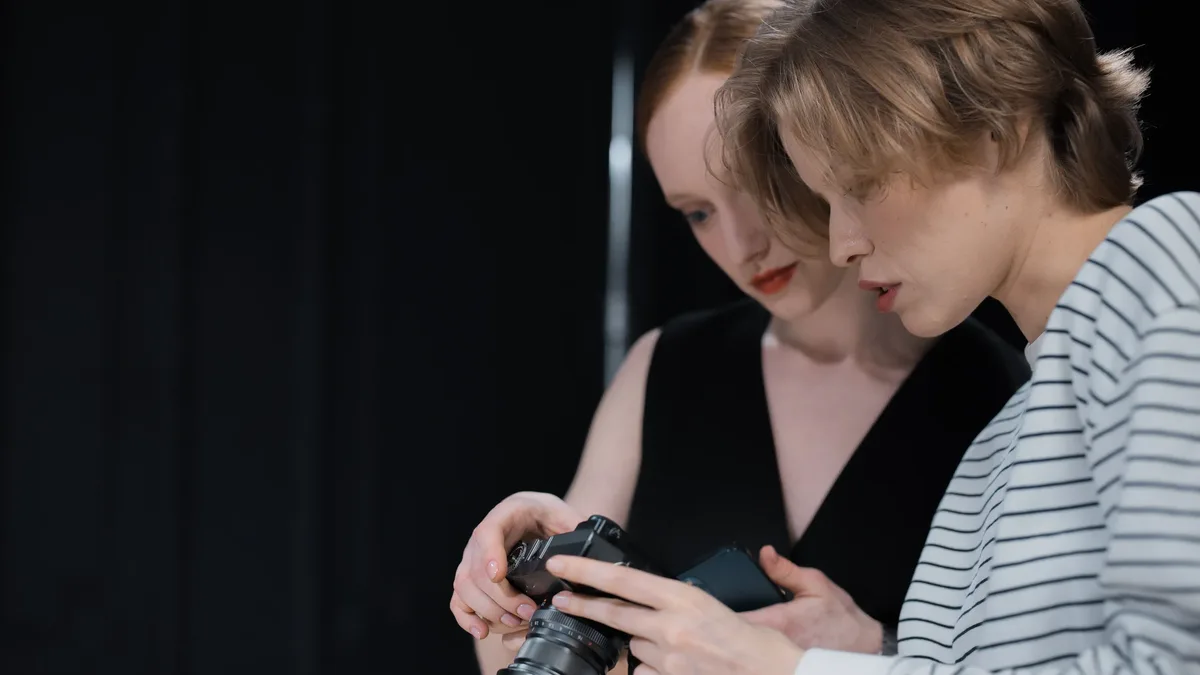
Ovie Carter, Bob Black Honored in New
Filmmaker Michael Blackshire, 32, has made a documentary about pioneering Black photographers Ovie Carter, 80, and Bob Black, 87.