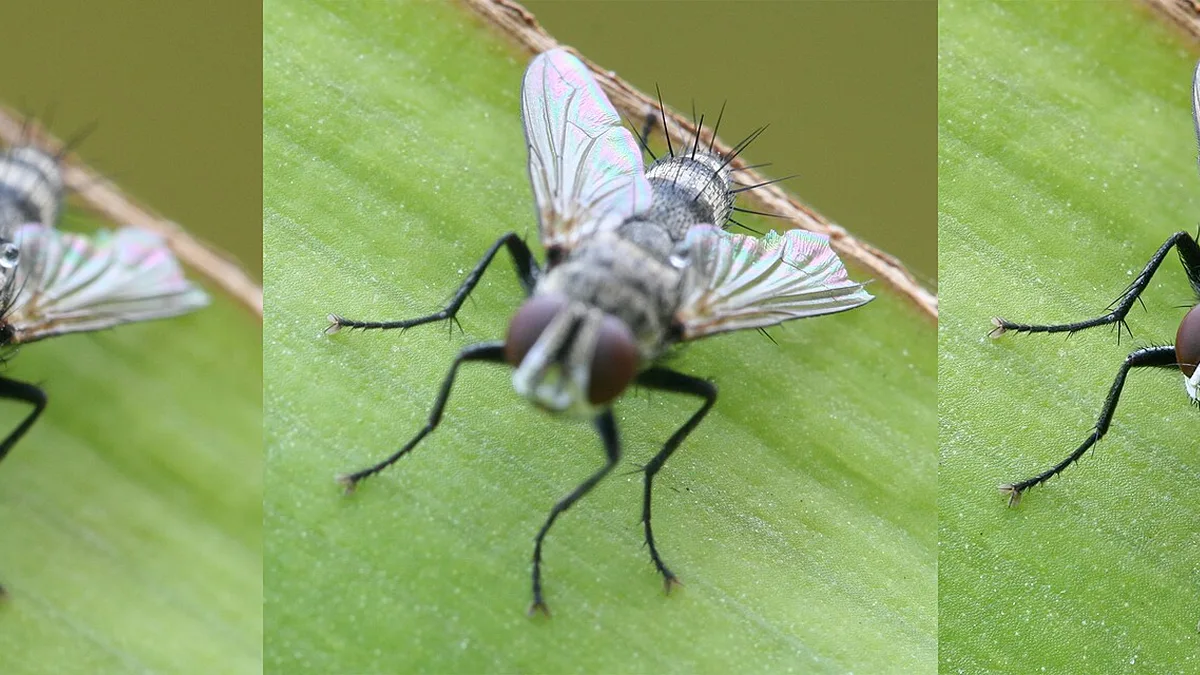
Focus Stacking
| Country of origin | United States |
|---|---|
| First created | 1980s |
| Original use | Scientific and macro photography |
| Primary equipment | Camera, macro lens, focusing rail or software |
| Process | Capturing multiple images at different focus distances |
| Result | A single image with extended depth of field |
| Key software | Helicon Focus, Zerene Stacker, Photoshop |
| Typical subjects | Small static objects (insects, coins, jewelry) |
Origin and history
Focus stacking is a digital image processing technique with origins in the field of photomicrography. Its initial development and documented use can be traced to the late 20th century, specifically the 1980s and 1990s, as a solution to a fundamental optical limitation. Scientists and microscopists needed to overcome the extremely shallow depth of field inherent in high-magnification microscopy. The computational method was developed to combine the in-focus regions from multiple photographs taken at different focal distances into a single, fully sharp image. Early implementations required specialized and expensive software, often linked to research institutions in North America and Europe. The technique migrated to the broader realm of macro and landscape photography with the advent of more powerful personal computers and accessible software in the early 2000s.
What it is for
Focus stacking is specifically for extending the apparent depth of field in a final photograph beyond the physical limits of the camera lens. It addresses the problem where a scene has important visual elements at varying distances that cannot all be rendered sharply in a single exposure due to optical constraints. This is critical in macro photography, where even at small apertures, the depth of field may be only millimeters thick, leaving much of a small subject blurred. In landscape photography, it is employed to achieve front-to-back sharpness from a nearby foreground element to a distant infinity point, even when using a wide aperture for light or creative reasons. The technique is also essential in product photography for ensuring every detail of a three-dimensional object is crisp, and in architectural photography for maintaining sharp lines throughout a structure's depth. Its purpose is not to create an unnatural effect, but to produce a final image that matches a detailed scene as perceived by the human eye, which actively scans and focuses.
Pros and cons
The primary advantage of focus stacking is the ability to produce images with deep, consistent sharpness that are optically impossible in a single shot, especially at high magnifications or with specific lens-to-subject geometries. It allows photographers to use optimal apertures for lens sharpness and light gathering without sacrificing depth of field. However, the technique introduces significant complexity and room for error; it is wholly unsuitable for any subject that moves, including plants in a breeze or living insects, resulting in misaligned "ghosting" artifacts. A common mistake is using too few source images, leaving blurred banding in the final composite, or using too many, which creates massive, unnecessary files and greatly increases processing time. Users often regret attempting focus stacking in variable light conditions, as slight changes in illumination between frames cause visible tonal inconsistencies in the final stack. The post-processing workflow is time-consuming and requires dedicated software, adding a substantial step between capture and final image that can discourage spontaneity. Furthermore, overuse in landscapes can sometimes produce an excessively, even unnaturally, crisp look that contradicts the natural atmospheric perspective of a scene.
Who it suits
This technique suits meticulous, patient photographers who work with static subjects and prioritize ultimate image detail over expediency. It is an essential tool for scientific, macro, and extreme close-up photographers for whom complete subject sharpness is a non-negotiable requirement. Landscape photographers who frequently incorporate very close foreground elements into their compositions and demand sharpness from inches to miles benefit greatly from mastering focus stacking. Commercial product photographers, particularly of small electronics, jewelry, or food, use it to ensure every manufactured detail is rendered with perfect clarity for catalogs and advertisements. It is well-suited to technical-minded individuals comfortable with both precise manual camera operation and dedicated post-processing software, as it involves a disciplined capture process and software learning curve. Conversely, it is ill-suited for action, event, portrait, or documentary photographers where subject motion and the need for rapid turnaround are paramount.
Latest Focus Stacking news
Latest reporting
iPhone 18 Pro Models Introduce Manual Aperture Control
Apple's iPhone 18 Pro and Pro Max feature identical camera systems with a six-blade variable aperture, adjustable from f/1.48 to f/4.0, alongside...
Insta360 Luna Pro Pocket Gimbal Camera
A review of the Insta360 Luna Pro highlights its fun, creative potential, while the iPhone 18 Pro's camera upgrades focus on new manual controls.
10 Vintage Lenses for High-Value Portrait Photography
A photography guide identifies ten vintage manual-focus lenses that offer high optical performance and unique rendering for portrait work on modern...
Photographers: mistakes improved work
Six photographers and videographers explain how technical errors, from missed focus to overexposure, led to creative breakthroughs and long-term...
Leica Q3 43 Launch Redefines Premium Compact Cameras
Leica’s September 2024 release of the Q3 43, a 60-MP full-frame compact with a new 43-mm f/2 lens, has shifted industry focus toward fixed-lens...

Affordable Pancake Lens Released for Leica M System
Brightin Star has released a compact manual focus pancake lens for the Leica M system, offering a 28mm perspective and a stylish design.