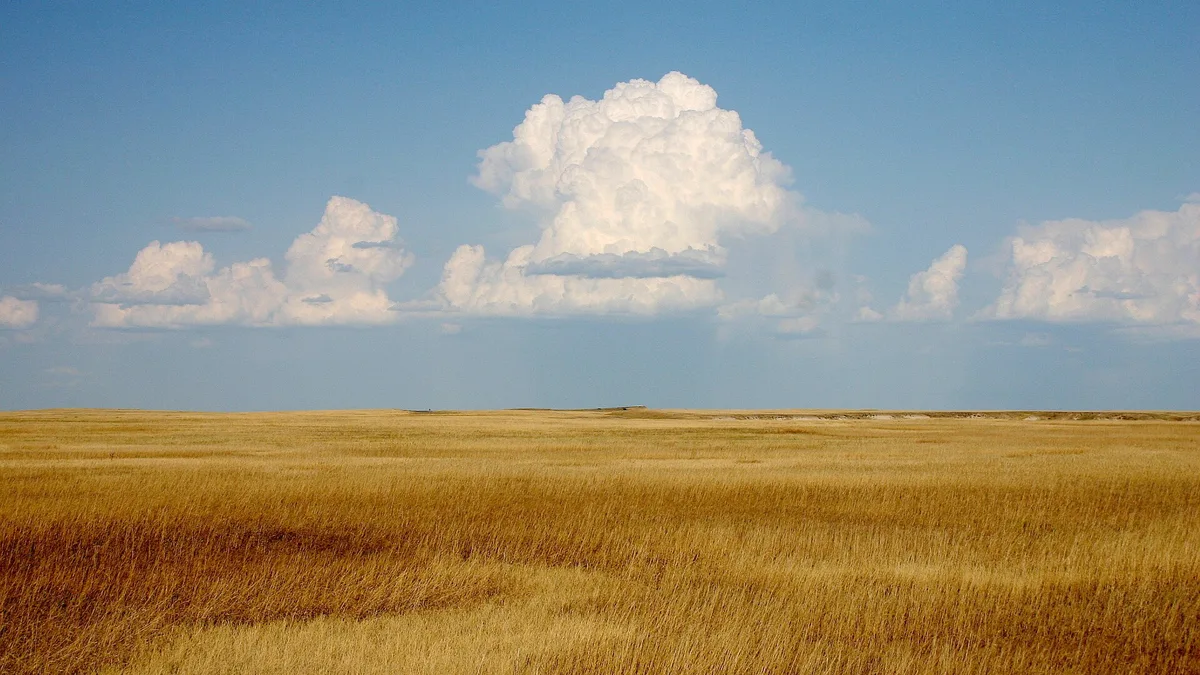
Landscape
| Country of origin | Varies by specific landscape |
|---|---|
| First created | 17th century (as a formal genre) |
| Original use | Artistic representation of natural scenery |
| Primary subject | Natural topography |
| Typical composition | Panoramic or vista |
| Depicted time of day | Varies (e.g., Golden hour, Noon, Twilight) |
| Season | Varies (e.g., Spring, Autumn, Winter) |
| Atmospheric conditions | Varies (e.g., Clear, Stormy, Misty) |
Origin and history
The artistic genre of landscape originated in China during the Tang Dynasty, around the 8th century. It emerged as a distinct and primary form of artistic expression, separate from figurative or religious art, centuries before it gained similar status in Western art. Chinese landscape painting, or *shanshui hua* (mountain-water painting), was deeply influenced by Daoist and Buddhist philosophies, emphasizing humanity's small place within the vast, eternal natural world. In Western art, landscape began to develop as a background element in religious and portrait paintings during the late Middle Ages and the Renaissance. It solidified as an independent genre in the Netherlands during the early 17th century, where prosperous merchants created a market for secular art depicting their land and skies. The genre's evolution was further propelled by the Romantic movement of the late 18th and 19th centuries, which prioritized emotional response to nature over idealized classical forms.
What it is for
The primary function of the landscape genre is to capture and convey the essence, appearance, and atmosphere of a specific or imagined outdoor space. It serves to document topography, weather conditions, and the particular quality of light found at a certain place and time, acting as a visual record before the advent of photography. Artistically, it is used to express emotional or spiritual responses to nature, ranging from awe and tranquility to drama and sublime terror. Landscape painting can also communicate cultural or national identity, celebrating familiar terrain or mythologizing a homeland's features. In a practical sense, it is employed in design and planning fields, such as garden design and architecture, to visualize proposed alterations to an environment. Furthermore, it provides a formal framework for artists to explore compositional principles, color theory, and the depiction of spatial depth and atmospheric perspective.
Pros and cons
A significant advantage of the landscape genre is its accessibility and broad, enduring appeal, as its subject matter is universally recognizable and often emotionally resonant without requiring specialized knowledge. It offers artists a limitless laboratory for studying natural light, color, and form under infinitely variable conditions. The genre's major con is its potential to become formulaic or picturesque, relying on overused compositional templates that prioritize pleasing views over authentic observation or personal expression. Many amateur practitioners regret choosing complex, vast vistas as subjects without first mastering the fundamental skills of simplifying form and controlling values, leading to busy, confusing compositions. A common technical mistake is misrepresenting atmospheric perspective, resulting in distant objects appearing as sharp and brightly colored as foreground elements, which flattens the spatial depth. The genre can also be criticized for sometimes presenting a romanticized or untouched view of nature, historically overlooking human labor or environmental change within the scene.
Who it suits
This genre particularly suits artists who are patient observers of natural phenomena and who derive deep satisfaction from studying the subtleties of light, weather, and seasonal change. It is ideal for those interested in the technical challenges of rendering space, texture, and atmospheric effects with accuracy or expressive intent. Landscape appeals to artists with a contemplative or philosophical disposition, who wish to explore themes of time, transience, and humanity's relationship to the environment through their work. It is a strong match for plein air practitioners who enjoy working directly in the field, adapting quickly to shifting conditions and drawing inspiration from immersion in a location. The genre also suits artists working in a documentary or topographical tradition, who aim to create a faithful record of a place for historical or scientific purposes. Conversely, it is less suited to artists who require dynamic human narrative or urban social commentary as a central driver of their work, as the genre traditionally minimizes human presence.
Latest Landscape news
Latest reporting

Kodak Ektar 100 Film Review: Vivid Color and Fine Grain
Kodak's Ektar 100 color negative film is celebrated for its vivid color saturation and exceptionally fine grain, making it a popular choice for...

Rokas Darulis releases 'Wild and Free'
Fashion photographer Rokas Darulis has published 'Wild and Free', a limited-edition book of 132 images. The project marks a personal return to the...

Photographer Craig Roberts on Finding Images Beyond
Landscape photographer Craig Roberts explains his shift from meticulously planned shoots to an improvised, 'found photo' approach, crediting gear...