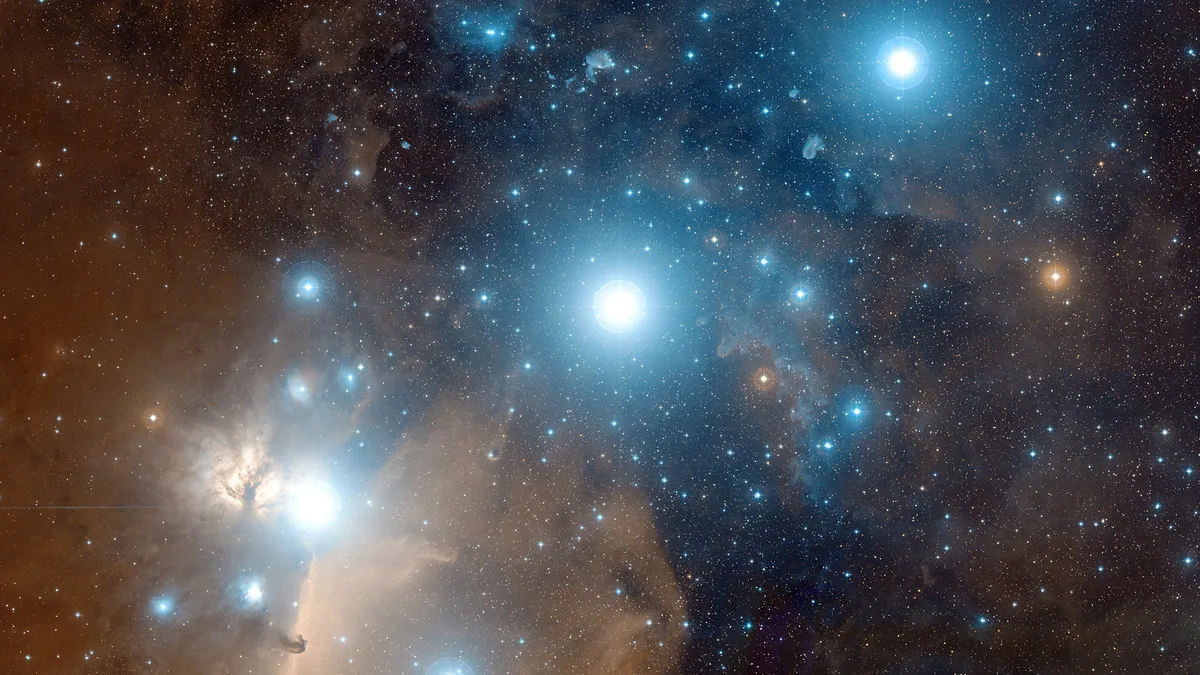
Astrophotography
| Subject | The celestial object or region of space |
|---|---|
| Light source | Natural celestial light (stars, nebulae, galaxies) |
| Light capture | Long exposure photography |
| Setting | Dark sky, often remote locations |
| Equipment | Telescope and tracking mount |
| Post-processing | Required to reveal detail |
| Original use | Scientific observation and public outreach |
Origin and history
Astrophotography originates from the combined scientific endeavors of the 19th century, primarily in Europe and the United States. The first successful permanent photograph of a celestial object was the daguerreotype of the Moon taken by John W. Draper in the United States in 1840. The field advanced significantly in the 1850s and 1860s with early stellar photography, including the work of William Bond and John Adams Whipple at the Harvard College Observatory. The late 19th century saw pivotal developments like the first photograph of a nebula, the Orion Nebula, taken by Henry Draper in 1880. The transition from purely scientific plates to more accessible film occurred throughout the early and mid-20th century. The modern era, defined by digital sensors and consumer-grade equipment, began in the late 20th and early 21st centuries, revolutionizing the practice.
What it is for
Astrophotography primarily serves to create a permanent, detailed record of celestial objects and phenomena that are often too faint or complex for the human eye to perceive. It is a critical tool for professional astronomy, allowing for the measurement, analysis, and discovery of stars, galaxies, and transient events over long periods. For amateurs, its purpose extends to personal documentation of the night sky, capturing the aesthetic beauty of constellations, the Milky Way, and planetary details. The practice is also used for educational outreach, providing tangible images that illustrate cosmic scale and structure to students and the public. Technically, it often involves overcoming the limitations of human vision by accumulating light over time through long exposures. Ultimately, it bridges scientific inquiry and artistic expression by framing the cosmos within a composed image.
Pros and cons
A primary advantage of astrophotography is its ability to reveal intricate structures and colors in nebulae and galaxies invisible during visual observation. The process itself fosters a deep understanding of astronomical concepts, optics, and precise technical procedures. However, a significant con is the substantial initial and ongoing investment required for specialized equipment like mounts, telescopes, and cameras. The learning curve is notoriously steep, involving complex software for image acquisition and processing, which can frustrate beginners. Common mistakes include poor polar alignment, leading to star trails, and underestimating the impact of light pollution, which ruins data. Many enthusiasts regret choosing overly ambitious targets initially, such as faint galaxies, before mastering the fundamentals of capturing brighter objects, resulting in discouragement. The pursuit is also highly dependent on weather conditions and requires considerable patience during long, cold nights for data collection that may still produce unusable results.
Who it suits
This genre best suits individuals with immense patience, a meticulous attention to technical detail, and a willingness to engage in persistent problem-solving. It is ideal for hobbyists who derive satisfaction from the methodical process of planning, capturing, and processing data as much as from the final image. Those with an existing interest in astronomy, physics, and photography often find the synthesis of these fields particularly rewarding. Individuals living in or with regular access to dark-sky locations have a distinct advantage, though urban astrophotographers can specialize in planetary or narrowband imaging. The practice suits people who are comfortable with software and digital workflow, as post-processing is an inescapable and complex component. It is generally not well-suited for those seeking instant results, casual point-and-shoot experiences, or anyone unwilling to invest significant time and resources into mastering a demanding technical craft.