Coyotes Pioneer World's Largest Wildlife Crossing
Two coyotes have been photographed using the $114 million Wallis Annenberg Wildlife Crossing over Highway 101 before its official December opening.
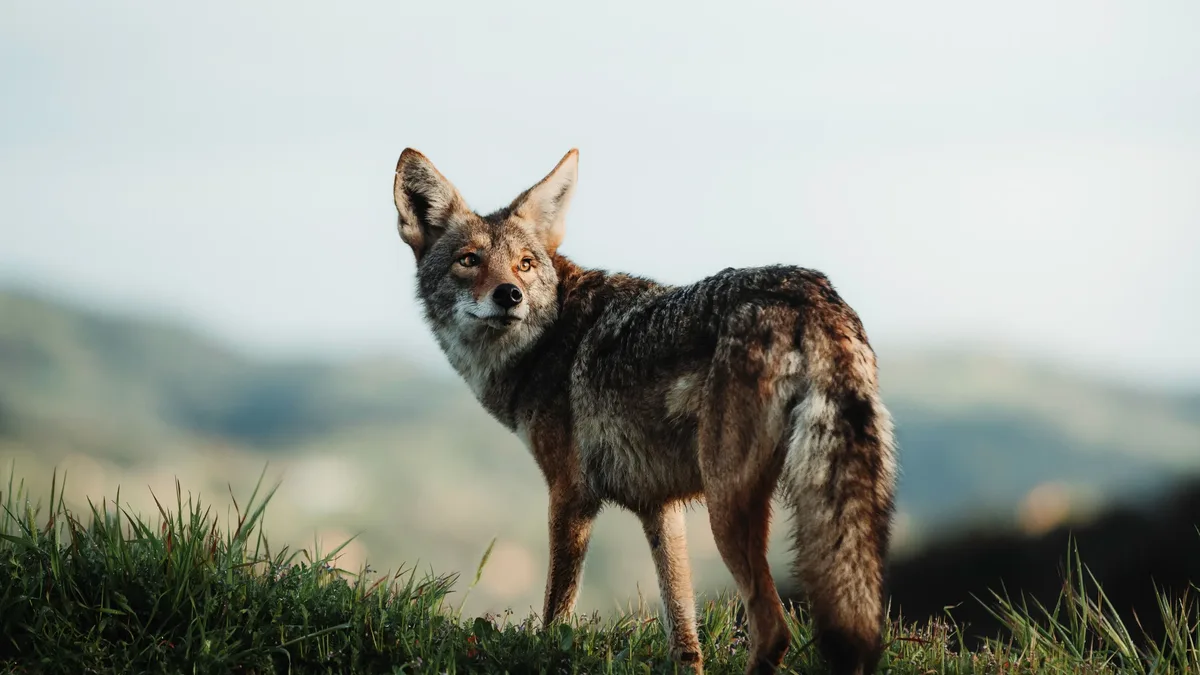
Two coyotes have become the first large mammals documented using the Wallis Annenberg Wildlife Crossing. The $114 million structure, the world's largest wildlife bridge, spans the 10-lane Highway 101 in Agoura Hills and is not scheduled to open officially until early December.
Remote trail cameras captured the animals exploring the crossing. The first coyote was photographed on the southern end of the structure on October 28. A second was recorded moving across the overpass itself at approximately 1:35 a.m. on November 5. Scientists believe the two sightings were of different coyotes. The second animal spent about 20 minutes on the crossing before turning back, a detail that suggests it was not spooked by light or noise from the hundreds of thousands of cars below.
Early Signs of Success
The early use is seen as a promising sign for the crossing's core mission. The structure is designed to reconnect habitats fragmented by the freeway for decades. This is critical for species like mountain lions, which suffer from inbreeding due to isolation. Beth Pratt of the Wildlife Crossing Fund expressed "awe and the feeling of rightness" at the sightings. She now believes a mountain lion might use the crossing before the official ribbon-cutting. "Word gets out in the animal world," she noted.
A Long-Awaited Project
Construction on the crossing began in 2022 after years of planning and fundraising. The main concrete structure measures 210 feet long and 174 feet wide. Crews are currently adding soil and native vegetation to help it blend into the landscape. While not fully complete, grading work has already made it accessible. Beyond the coyotes, a mountain lion with cubs, a mule deer, and bobcats have been seen near the crossing.
Scientific Study Ahead
For researchers, the project's launch offers a profound learning opportunity. Six cameras have been installed on the crossing itself to monitor activity. Scientists aim to study not only which animals use it, but how effectively it reconnects the entire ecosystem. We want to understand how effective it is in reconnecting an ecosystem that has been divided by the freeway for decades, said Seth Riley of the National Park Service. That research will examine impacts on wildlife diversity, genetics, and behavior over many years.
The first official traveler was a western fence lizard, but the coyotes' bold exploration has captured attention. Biologist Jeff Sikich had predicted a coyote would be first, while Pratt had bet on a mule deer. The coyote photographed on November 5 was seen carrying an object, possibly a bone or a stick, in its mouth as it walked under a pitch-black sky.