Military Origins of Zoom Lenses and Infrared Film
A report traces the lineage of key photographic technologies, including the practical zoom lens and color infrared film, to military research and
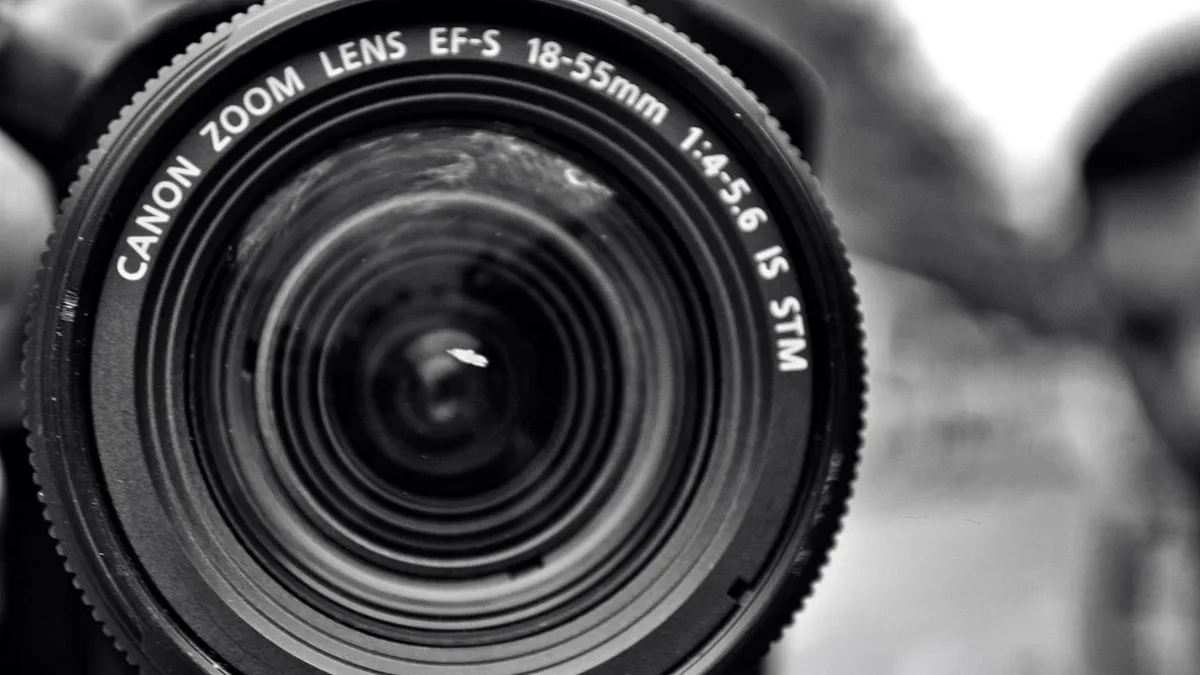
The zoom ring on a modern 70-200mm lens traces its lineage to a viewfinder accessory designed for US Army Signal Corps combat movie cameras. Austrian-born engineer Frank Back developed the single-barrel linear movement scheme while working on military equipment, a design that later became the foundation for the first commercially successful zoom lens.
Zoom optics existed before Back's work, with patents and limited production models dating to the early 20th century. However, the report states that Back's wartime job for the Signal Corps, where he designed a variable-focus viewfinder designated the PH-532/UF, was the important development. In this viewfinder, he worked out the mechanism that placed moving optical elements in one sliding barrel, eliminating the complex cams and gears of earlier designs.
The Practical Zoom Lens
For a lens that would expose film, Back added a compensator element fixed to the variator within the same barrel. This combination allowed the image to remain in focus throughout the zoom range. He applied for a patent on the civilian version in July 1946. A prototype was used to cover a Brooklyn Dodgers game for WCBS-TV in July 1947, and Most important newsreel cameramen employed the lens at the World Series that fall.
The first zoom lens for still photography, a 36-82mm f/2.8 Zoomar sold through Voigtländer, did not arrive until 1959. The report clarifies that modern zoom lenses use a different, cam-driven optical compensation system introduced by Pierre Angénieux in 1956. Nevertheless, Back's design established the zoom lens as standard equipment, first in television and newsreels, then in still photography a decade later.
Color Infrared Film
While infrared-sensitive emulsions were developed in civilian labs in the 1930s, the report identifies the false-color version as a direct military invention from World War II. Living vegetation reflects near-infrared light strongly, unlike green paint and netting. Kodak, under military contract, built a color camouflage detection film that rendered infrared as red, allowing for easy visual separation.
This film was supplied to Allied forces from 1942 under names like Kodacolor Aero Film. The product line continued for decades with films like Ektachrome Infrared Aero and Aerochrome, which saw extensive use in forestry and geology. Kodak discontinued the 35mm consumer version, Ektachrome Professional Infrared EIR, in 2007 and ended production of Aerochrome III 1443 in 2009.
The report notes that achieving a similar color palette with digital photography requires a full-spectrum camera conversion and specialized filters designed to pass a specific mix of visible and infrared light, as standard infrared-pass filters discard the visible color information the original film recorded.
Night Vision and Aerial Mapping
The report also covers the military development of early active infrared night-vision devices, like the American Sniperscope used on Okinawa in 1945, and German systems fielded in the war's final months. It states that passive image intensification, which amplifies ambient light, arrived with the AN/PVS-2 device developed from 1964 and used in Vietnam. However, the connection to modern photography is limited; the report argues that contemporary low-light camera sensors are based on silicon technology, not the photocathode tubes from these military devices.
In aerial mapping, the foundational work of photogrammetry was conducted by French army officer Aimé Laussedat starting around 1849, funded by the military to create topographic maps from photographs. By World War II, specialized mapping cameras like the Fairchild K-17, using large-format film and wide-angle lenses such as the Bausch & Lomb Metrogon, were flown in clusters to capture overlapping images for stereo reconstruction of terrain. The report concludes that every modern drone mapping mission uses this same fundamental method of overlapping frames, with the processing now handled by software.