Lomography Petzval Métamorphose lens offers
Lomography's new Joseph Petzval Métamorphose 35mm F1.8 Art lens provides seven levels of swirling bokeh via a dedicated dial, reviving a flawed
Lomography has unveiled the Joseph Petzval Métamorphose 35mm F1.8 Art lens, a manual-focus prime for mirrorless cameras with adjustable bokeh effects. The lens is available for pre-order now for $649 and will ship beginning in December. It is a full-frame manual-focus prime for Canon RF, Nikon Z, and Sony E camera mounts. The Métamorphose joins Lomography’s Petzval Art range and supports drop-in rear aperture plates to change the bokeh's shape.
Optical design and bokeh mechanics
The lens uses a revived Gaussian optical formula and features drop-in aperture plates and a dial to control seven levels of swirling, warping bokeh without shifting focus. Unlike more direct Petzval-derived designs, the Métamorphose draws on an early Gaussian optical formula developed by Carl Friedrich Gauss in 1817. Gauss’s lens was historically considered unusable for photography due to coma and astigmatism aberrations and was relegated to telescopes. Lomography reworked this historically 'rejected' formula into a modern lens where these 'flaws' are used as creative tools.
The lens embraces flaws that modern lens designs aim to avoid. It offers seven adjustable levels of swirling and warping bokeh, moving from soap-bubble bokeh to a more dramatic, stretched look. Bokeh strength can be adjusted across these seven levels via a dial and can be further changed by adjusting aperture and focus. For video use, it includes a focus-coupling mechanism to remove focus shift challenges, ensuring the bokeh character stays consistent as focus is adjusted.
The core specifications of the lens are as follows:
| Feature | Specification |
|---|---|
| Aperture Range | f/1.8 to f/22 (stopless) |
| Bokeh Settings | 7 levels, adjustable via dial |
| Iris & Bokeh Control Rotation | 90° |
| Lens Construction | 6 elements in 5 groups |
| Focusing Mechanism | Helicoid, with 180° focus throw |
| Electronic Contacts | None |
| Filter Thread | 67mm |
| Field of View | 62° |
| Closest Focusing Distance | 0.35m (1.1′) |
| Built-in 1/4-inch lens support | Yes |
| Detachable lens hood | Yes |
Physical design and usability
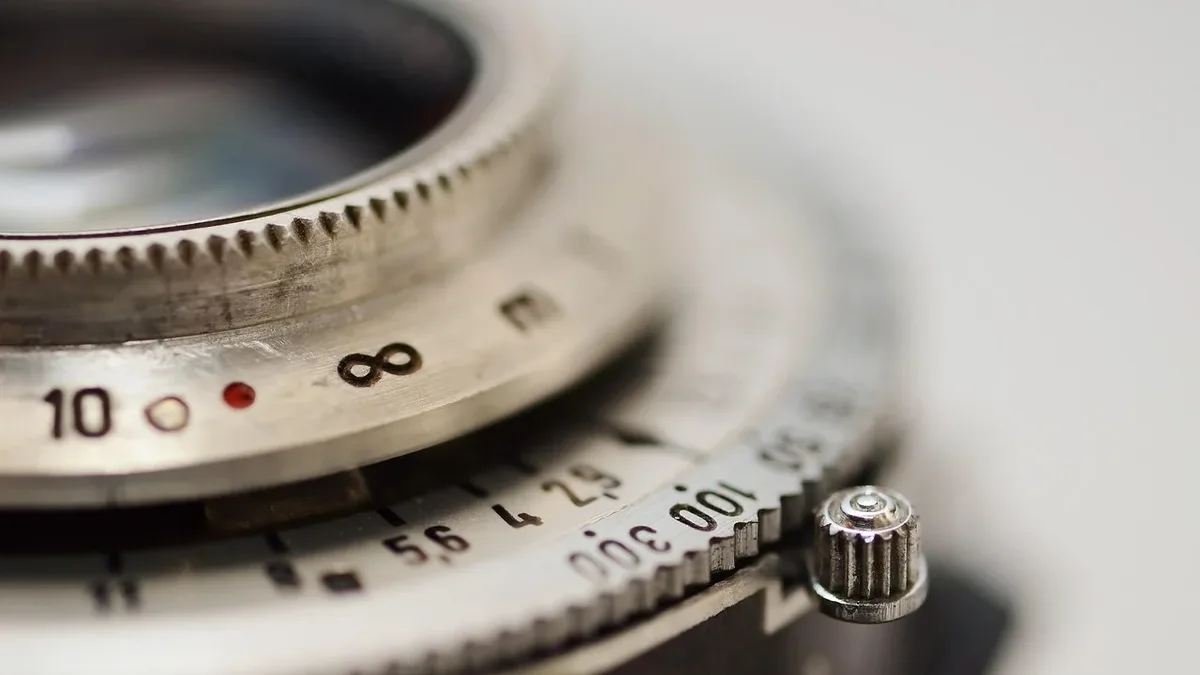
Built for rig use with a 1/4-inch mounting point, de-clicked aperture, 180-degree focus throw, and 67mm filter thread, the lens supports both stills and video workflows. It uses Mod 0.8 gearing for standard follow-focus systems. The lens features a de-clicked aperture ring for smooth exposure adjustments. The built-in 1/4-inch mounting point can support the lens directly on a compatible camera rig, gimbal, or tripod.
Creative effect and use cases
At close focus, the lens creates a perception-bending warp where light stretches into comet-like shapes, ideal for conveying motion or disorientation in portraits, street, and fine-art photography. With the effects turned down, the bokeh is similar to Lomography's previous Petzval Art lenses, with softer edges and soap-bubble bokeh. With the bokeh level increased, the center stays sharp while the edges stretch and appear blurred. The effect becomes more pronounced at the lens's 0.35m close focusing distance.
In sample images at close focus, only the very center of the frame remains sharp. It produces a perception-bending optical warp that pulls the eye toward the center. Images show points of light stretching into comet-like shapes rather than classic circular swirl. At close range, it creates a tug-of-war between swirl and stretch, giving an illusion of the subject leaping forward. Lomography describes the increased bokeh effect as a "powerful hallucinatory effect around your subject."
The lens includes five interchangeable aperture plates: star, sun, oval, heart, and snowflake. This 35mm f/1.8 model differs from earlier Petzval lenses by offering an adjustable range of effects rather than one consistent look. It also includes video-specific features like follow-focus gearing that earlier siblings lacked. The Petzval Art line is named after Joseph Petzval, who designed an influential portrait lens in 1840. Lomography introduced its first modern Petzval lens in 2013, and the series has since expanded with 27mm, 35mm, 55mm, 80.5mm and 135mm models.
Third-party lenses with similar aesthetics include Lensbaby’s Twist 60 and Velvet, Helios 44-2, and Meyer-Optik Trioplan. Priced under $700, it is positioned as an affordable tool for serious photographers. It helps portrait, fine-art, street, and still life photographers create distinct visuals without post-production. The lens will ship beginning in December and is available for pre-order now for $649.