Long Exposure
| Country of origin | United Kingdom |
|---|---|
| First documented | 1830s |
| Original use | Scientific recording of celestial motion |
| Typical exposure time | Several seconds to several hours |
| Primary effect | Motion blur of moving elements |
| Essential equipment | Stable tripod |
| Common subject matter | Water, traffic, stars |
Origin and history
Long exposure photography originated in Europe during the early 19th century as a direct consequence of the technical limitations of the first photographic processes. The earliest photographic techniques, such as the daguerreotype introduced in the 1830s, required extremely long exposure times, often several minutes, to form a latent image on the photosensitive plate. These extended durations were not a creative choice but a necessity due to the low sensitivity, or slow speed, of the early photographic materials. Pioneering photographers like William Henry Fox Talbot documented stationary architectural subjects because moving elements like people or vehicles would either not register or would appear as blurred ghosts. The technique evolved from a limitation into an artistic tool as photographic emulsions became faster, allowing photographers to intentionally choose long exposures for creative effect by the late 19th and early 20th centuries. The development of neutral density filters and more precise mechanical shutters in the mid-20th century further cemented long exposure as a deliberate and controlled photographic method.
What it is for
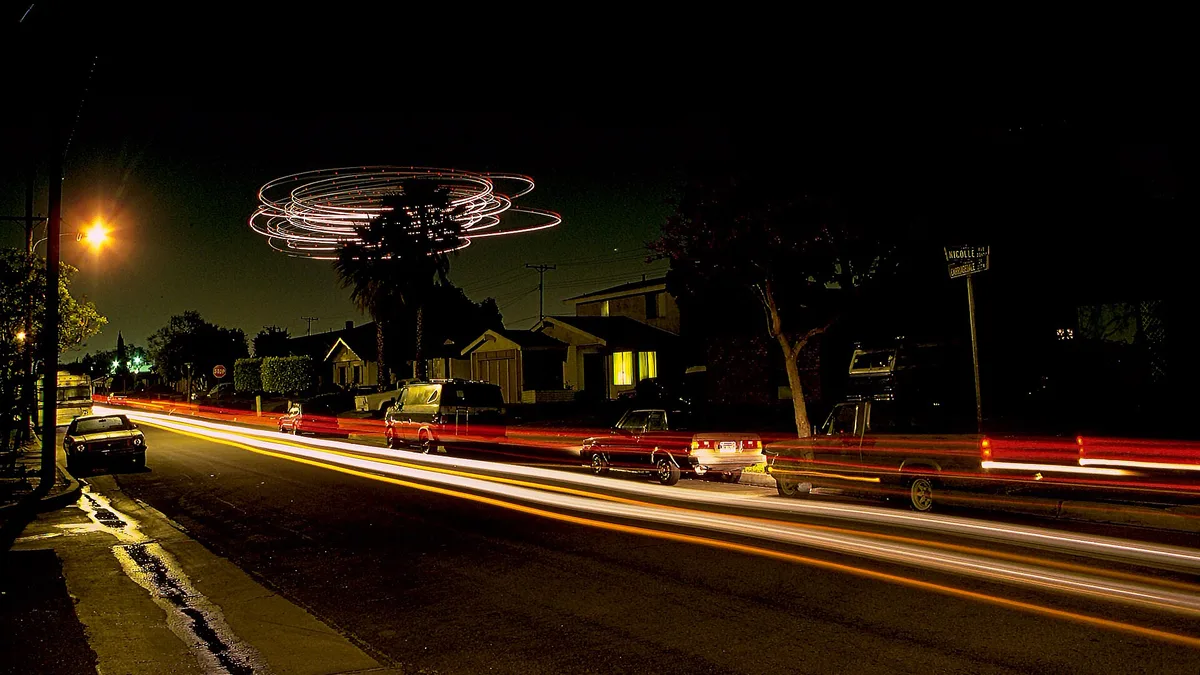
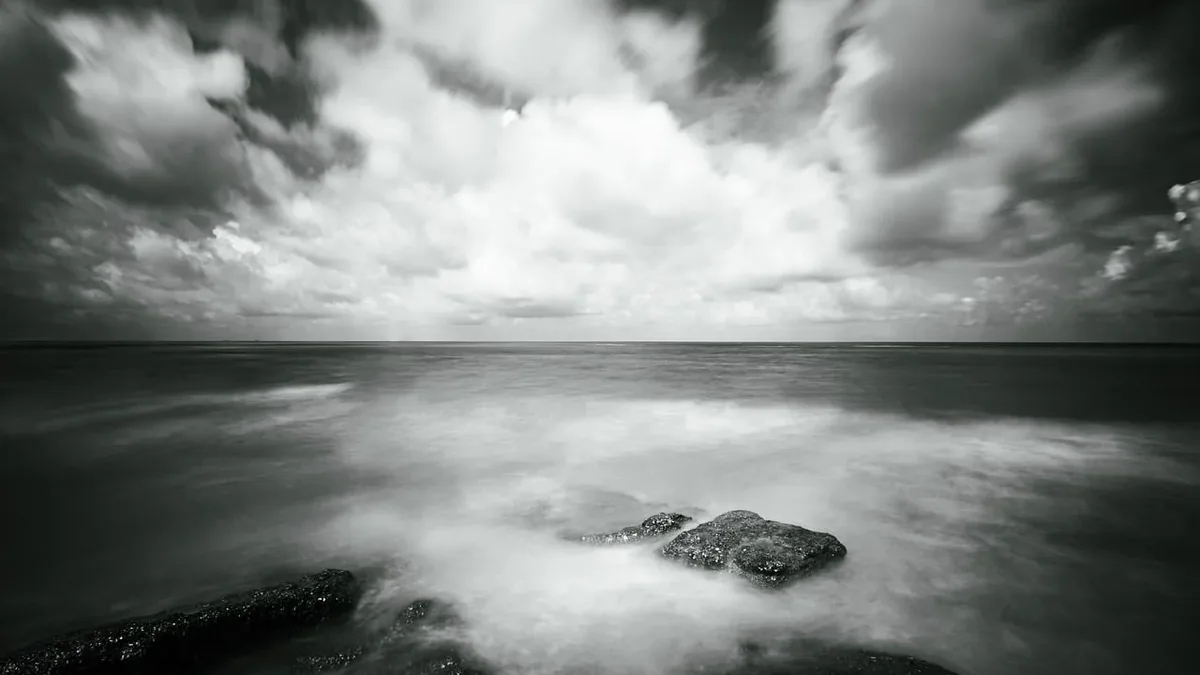
Long exposure photography is primarily used to visually represent the passage of time within a single, static image, transforming dynamic subjects into ethereal forms. It is employed to smooth and blur moving water, such as rivers, waterfalls, and ocean waves, rendering them into a soft, mist-like texture that contrasts with static elements like rocks. In urban and street photography, the technique is used to erase moving people and vehicles from a scene, creating empty, surreal cityscapes, or to create light trails from car headlights and taillights that map the flow of traffic. Astrophotographers utilize very long exposures to capture the apparent motion of stars as star trails across the night sky or to gather enough light from faint celestial objects like nebulae. The technique is also fundamental to capturing lightning strikes, fireworks displays, and other transient light events that are unpredictable over a short duration. Furthermore, it can be used in portrait or conceptual photography to convey motion blur, suggesting movement and energy around a relatively still subject.
Pros and cons
A significant pro of long exposure photography is its unique ability to reveal visual patterns and flows of motion that are invisible to the naked eye, creating images with a distinct, often serene aesthetic. It allows for the simplification of chaotic scenes, such as a crowded square or turbulent water, by smoothing them into cohesive shapes and tones. However, a major con is its stringent requirement for absolute camera stability; even minute vibrations during the exposure will ruin the image, necessitating a robust tripod and often a remote shutter release. Photographers often regret choosing this technique in bright daylight without the proper equipment, as the required slow shutter speed can lead to overexposed images unless neutral density filters are used to block light. A common mistake is failing to account for "hot pixels" or sensor noise that becomes pronounced during exposures lasting several seconds or minutes, degrading image quality. Furthermore, the technique is poorly suited to capturing decisive moments or sharp action, locking the photographer into a passive, observational role that can be frustrating when the subject matter is unpredictable.
Who it suits
This technique suits patient, meticulous photographers who enjoy pre-visualization and careful planning, as each shot requires deliberate setup and often a waiting period. Landscape photographers, particularly those specializing in seascapes and water features, frequently employ long exposure to achieve their signature minimalist and tranquil style. Architectural and fine-art urban photographers find it valuable for creating clean, human-free images of structures and streetscapes, often working during the blue hour or at night. Astrophotographers and those interested in capturing celestial events are inherently dependent on long exposure techniques to collect sufficient light from distant stars and galaxies. It is less suited for photojournalists, sports photographers, or event photographers where capturing instantaneous, sharp moments is the primary objective. Beginners can successfully learn long exposure with basic gear, but mastering it requires an understanding of exposure reciprocity, filter systems, and advanced post-processing techniques to manage noise.
Latest Long Exposure news
Latest reporting

Instagram Tests 90-Minute 'Features' Video Format
Instagram is testing a new horizontal video feature called Features, allowing uploads up to 90 minutes long. The pilot aims to retain creators and...
Canon's 1967 Fluorite Crystals Fix Telephoto Color Errors
Canon has grown synthetic fluorite crystals since 1967 to correct a specific color fringing in long lenses that ordinary glass cannot fix.
The Math Behind Erasing Crowds with Long Exposures
A technical analysis explains the precise conditions under which moving people vanish in long-exposure photographs.
Photographers: mistakes improved work
Six photographers and videographers explain how technical errors, from missed focus to overexposure, led to creative breakthroughs and long-term...
Daguerre's 1838 Photo Captures First Person
Louis Daguerre's 1838 daguerreotype of a Paris boulevard, taken during a minutes-long exposure, accidentally recorded a man having his boots shined.
Clay Bolt's decade-long quest to photograph the Americas' 90 bumblebee species
Conservation photographer Clay Bolt is a decade into a mission to photograph all 90 bumblebee species in the Americas, with 12 left to find.