
Nikon
| Manufacturer | Nikon |
|---|---|
| Sensor type | CMOS or CCD |
| Lens mount | Nikon F-mount or Nikon Z-mount |
| Image stabilization | In-body or lens-based |
| Viewfinder type | Optical or electronic |
| Video recording | Standard definition to 8K UHD |
| Battery type | Rechargeable lithium-ion |
| Connectivity | USB, HDMI, Wi-Fi, Bluetooth |
Origin and history
Nikon originates from Japan, with its photographic lens and camera business beginning in the early 20th century. The company was formally established in the 1910s, initially focusing on the manufacture of optical glass and precision instruments. Its entry into the camera market came decades later, following its expertise in lens crafting for other applications. The first Nikon-branded camera, the Nikon I, was launched in the late 1940s, marking the start of its journey in photography. This development positioned the company as a direct competitor to established German camera manufacturers of the era. The success of its early lenses and cameras among photojournalists, particularly during the Korean War, helped build its international reputation for ruggedness and optical quality.
What it is designed for
Nikon cameras are designed for capturing still photographs and, in modern iterations, high-definition video across a vast range of subjects and conditions. The core design philosophy has consistently emphasized reliability, ergonomic handling, and exceptional image quality through advanced optics and imaging sensors. Professional-grade models are engineered to withstand extreme environments and intensive use, making them tools for demanding visual storytelling. Consumer and enthusiast models prioritize accessibility and creative features, enabling photographers to explore composition and technique. The system is built around the F-mount and, more recently, the Z-mount, allowing for a deep ecosystem of interchangeable lenses. This design for a comprehensive system ensures photographers can adapt their kit for specific needs, from macro and astrophotography to sports and portraiture.
Development and versions
Development has progressed through distinct eras, defined by film format, autofocus technology, and the transition to digital imaging. The flagship F-series of film single-lens reflex (SLR) cameras, beginning in the late 1950s, established the professional standard for decades and featured a robust bayonet lens mount. The advent of autofocus in the 1980s led to new series like the N-series, while manual focus cameras like the FM2 remained popular for their mechanical simplicity. The digital revolution saw the introduction of the D-series DSLRs, with professional lines (D1, D2, D3, etc.) and high-resolution models (D800 series) evolving separately. The mirrorless Z-mount system, launched in the late 2010s, represents the current major platform, featuring a wider lens mount diameter and shorter flange distance. Throughout these versions, parallel lines of consumer DSLRs (D3000, D5000 series) and advanced compact cameras (Coolpix series) have catered to broader markets.
Best camera for Nikon
There is no single "best" Nikon camera, as the optimal model depends entirely on the photographer's specific needs, budget, and subject matter. Portrait and studio photographers often prioritize high resolution and color fidelity, making models like the Z8 or D850 excellent tools. Enthusiasts seeking a balance of performance and size may find advanced mirrorless models like the Z6 or Z7 series ideal for their versatility. For those entering interchangeable lens photography, entry-level DSLRs like the D3500 or mirrorless options like the Z50 provide a accessible learning platform. The "best" is always defined by which camera most effectively solves the photographic problems presented by the user's typical light and setting.
Camera settings for Nikon
Optimal camera settings for a Nikon are dictated by the interplay of available light, desired creative effect, and the specific subject motion. A foundational approach is to select a semi-automatic mode like Aperture Priority (A) to control depth of field, crucial for isolating a subject in a busy setting or achieving front-to-back sharpness in a landscape. In rapidly changing light, Auto ISO with a minimum shutter speed setting can maintain exposure while preserving control over motion blur. For consistent studio light or tripod-based work, full manual mode (M) with a fixed, low ISO provides maximum control over the exposure triangle. Utilizing the camera's built-in metering modes (matrix, center-weighted, spot) allows for accurate exposure assessment based on whether the light is even, backlit, or focused on a specific tone. Customizing autofocus settings, such as switching between single-point AF for static subjects and dynamic-area AF for moving ones, is critical for technical sharpness in the chosen setting.
Overview
Nikon is a major manufacturer of imaging products, encompassing digital cameras, lenses, and accessories within two primary ecosystems: the legacy F-mount DSLR system and the modern Z-mount mirrorless system. The company's reputation is built on a long history of producing lenses with high optical clarity, color rendition, and mechanical precision, known as Nikkor lenses. Its camera bodies are recognized for their ergonomic design, often favoring a deep grip and logical control layout that facilitates operation without removing the eye from the viewfinder. The imaging pipeline, from sensor design to image processing algorithms, aims to produce files with wide dynamic range and accurate color science. As a system, Nikon offers solutions for nearly every photographic discipline, supported by extensive lens libraries and professional services. The ongoing development is firmly centered on the Z-mount, which leverages new optical designs to meet increasing demands for resolution and speed.
What to know
It is important to know that committing to Nikon is an investment in a specific lens mount and its accompanying ecosystem of optics and accessories. The long-lived F-mount uses a mechanical aperture coupling and autofocus drive system, granting compatibility with decades of lenses, though often with functional limitations on newer bodies. The newer Z-mount features a fully electronic interface, enabling faster communication and more advanced optical designs, particularly for wide-aperture lenses. Nikon's image files, whether NEF (RAW) or JPEG, are known for a particular color response and a robust RAW file format that retains considerable data for post-processing. The company's flash system, called Creative Lighting System (CLS), offers advanced wireless flash capabilities for controlling off-camera light. Understanding the lens nomenclature (e.g., S-Line, ED, VR) is key to selecting optics suited for specific quality and stabilization needs.
Common questions
A common question is whether older F-mount lenses will work on newer Z-mount mirrorless cameras, which they can via an official FTZ mount adapter, often with full autofocus and metering functionality for newer lenses. Photographers frequently ask about the difference between full-frame (FX) and crop-sensor (DX) Nikon cameras, which affects field of view, lens compatibility, and overall system size and cost. Many users inquire about the longevity of the DSLR system versus mirrorless, with Nikon clearly directing future innovation towards the Z-mount while continuing to support existing DSLRs. Questions regarding video capabilities are prevalent, with newer Z-series models offering advanced features like 4K and 8K recording, internal log profiles, and improved autofocus during video capture. Another typical question concerns the battery life of mirrorless models, which historically is shorter than DSLRs due to constant use of electronic viewfinders and sensors, though newer models have improved significantly.
Pros and cons
A significant pro is the system's renowned lens quality and consistency, providing photographers with reliable optical performance across a wide range of focal lengths and price points. The ergonomics and build quality of mid-to-high-tier bodies are excellent, instilling confidence during prolonged use in challenging conditions. A notable con is that, compared to some competitors, Nikon has been slower to adopt certain technologies, such as in-body image stabilization and fully articulated screens, in its product timeline. Users sometimes regret choosing Nikon for specialized video work, as certain competing systems have offered more comprehensive video-centric features and lens options for a longer period. A common mistake is investing heavily in the F-mount system without recognizing the strategic shift to Z-mount, potentially leading to costly dual-system transitions or adapter reliance. The menu system and some software implementations, while improved, can be perceived as less intuitive than those of rivals, presenting a learning curve.
Who it suits
It is an excellent fit for professionals in fields like photojournalism, wildlife, and landscape photography, where reliability and optical performance in varied light are paramount. Enthusiasts who appreciate a deep, legacy lens system for adaptation and exploration also find value in the platform's continuity. The system suits those who prefer a specific color science and file rendering that often requires less post-processing adjustment for naturalistic results. It is less suited for videographers or hybrid shooters whose primary workflow demands the most advanced autofocus tracking for video, internal RAW recording, or a vast selection of dedicated cine lenses. Budget-conscious beginners may also find competing systems offer more entry-level mirrorless options with newer features at similar price points.
Latest Nikon news
Latest reporting
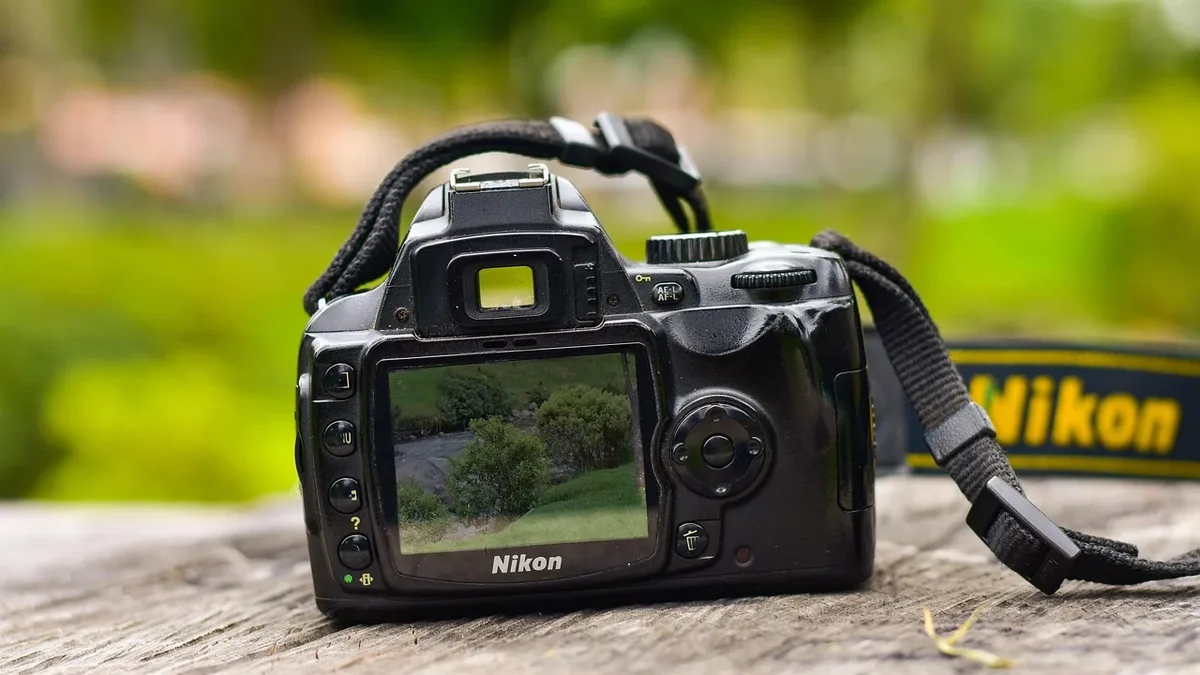
Nikon Z5IIC Launches with Casual Features and 4K 60fps
Nikon has launched the Z5IIC, a $1,399 full-frame mirrorless camera. It is the company's first model in over a year and the first with scene modes on...
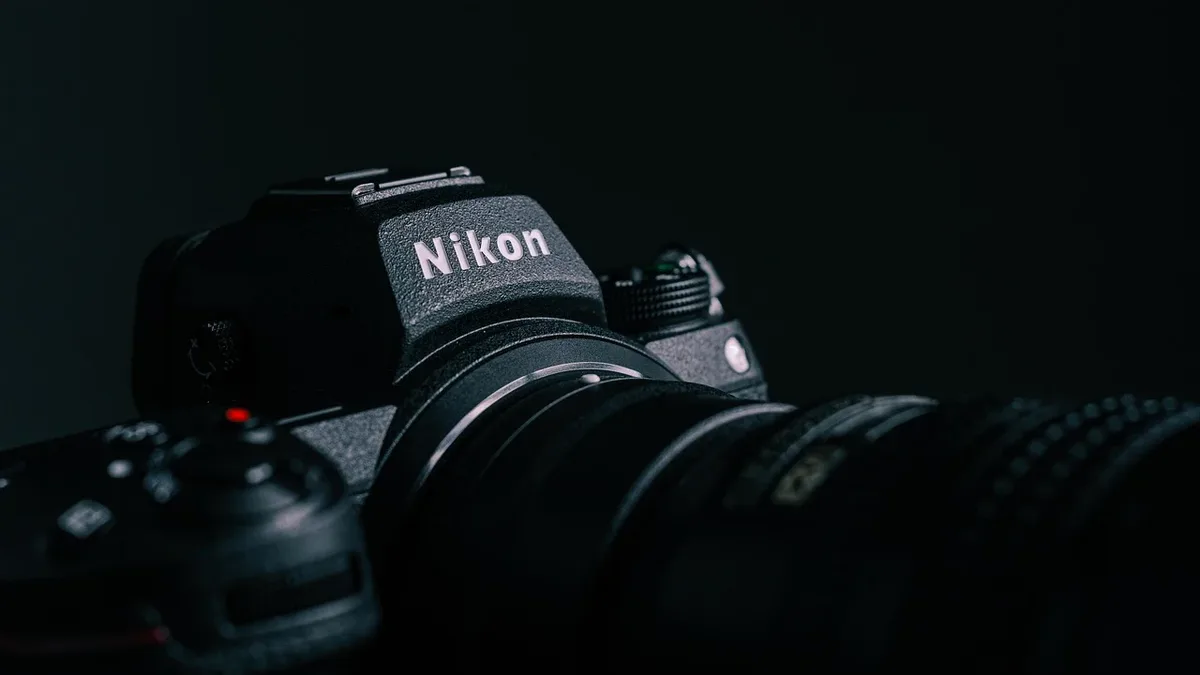
Nikon Z5IIC Features and Specifications for Casual
Nikon's new Z5IIC full-frame mirrorless camera, priced at $1,399.95, offers a compact, viewfinder-free design with beginner-friendly scene modes and...
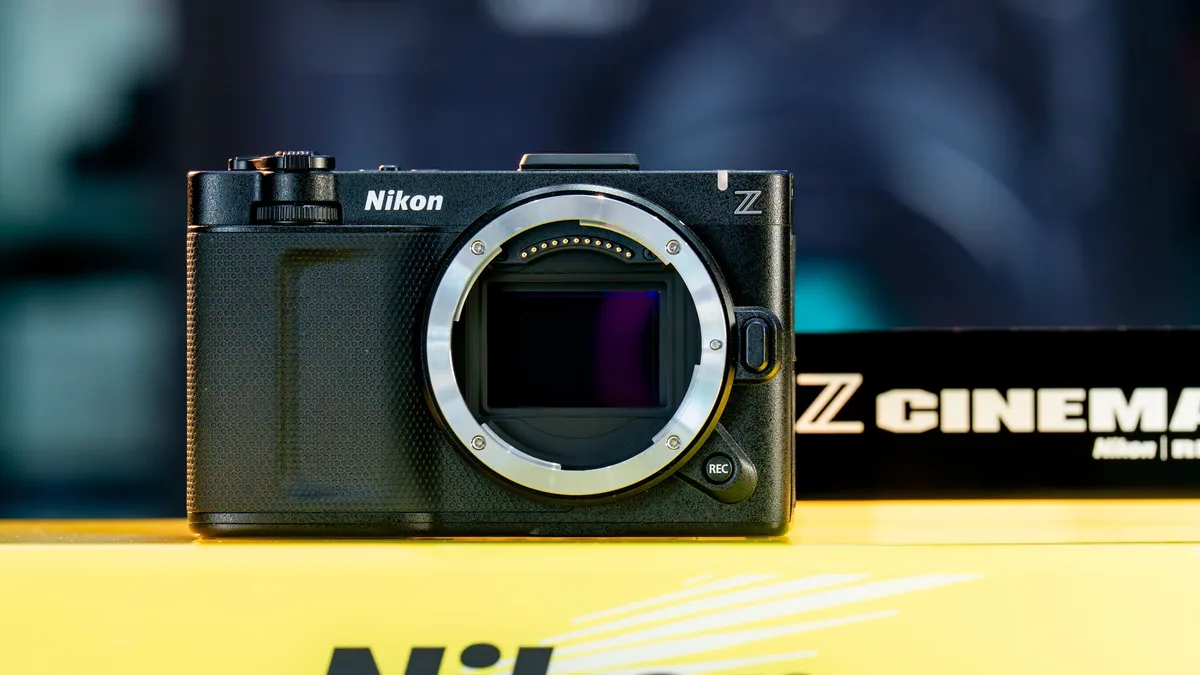
Nikon launches viewfinderless Z5IIc
Nikon has announced the Z5IIc, a new full-frame mirrorless camera that removes the electronic viewfinder to become its cheapest full-frame model.

Cloud Workshop's FTZ Adapter Covers
A Chinese manufacturer has created custom covers for Nikon's FTZ lens adapters, aiming to improve the look and feel when using older DSLR lenses on...

Viltrox AF 35mm F1.2 LAB N FE review - excellent value and sharp - is this the lens of your dreams?
The Viltrox AF 35mm F1.2 LAB N FE lens is a full-frame lens designed for Sony E and Nikon Z mount cameras. It features a robust metal construction...

Nikon Coolpix P1100: Ultra-Zoom Bridge Camera Offers Unparalleled Reach
The Nikon Coolpix P1100 boasts the world's longest telephoto zoom lens, providing an incredible 24-3000mm equivalent zoom range.