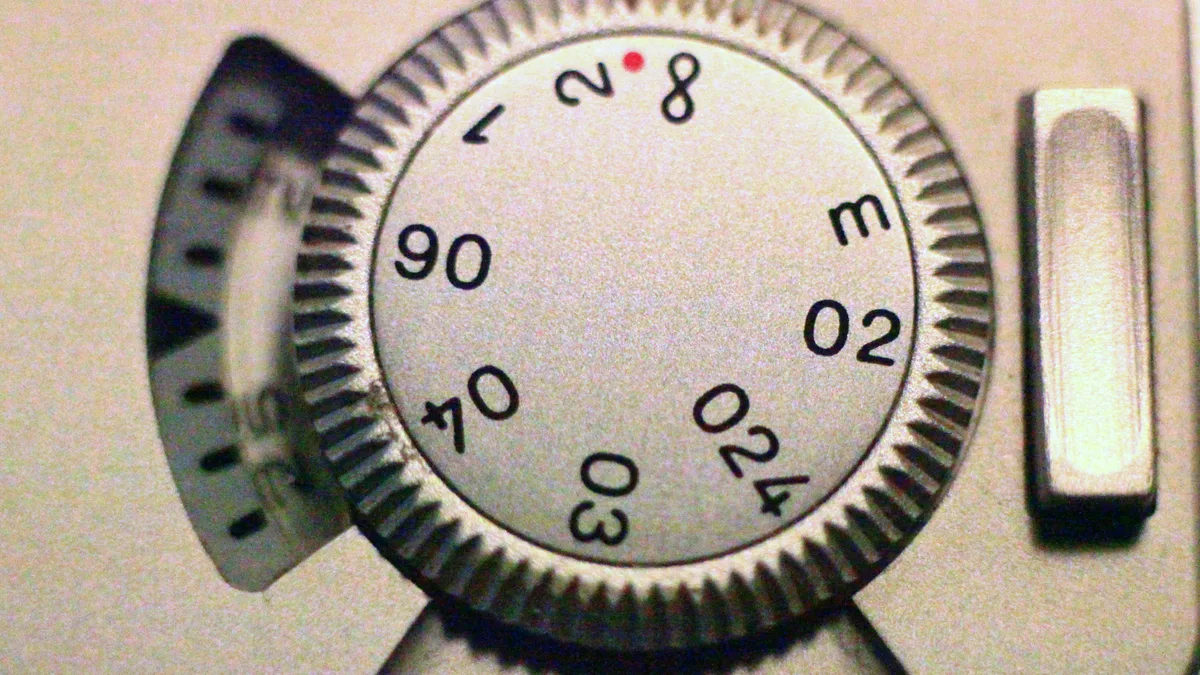
Hyperfocal Distance And Where To Focus For Landscape
Origin and history
The concept of hyperfocal distance has its origins in the technical optics of early photography in the 19th century. It emerged from the need to maximize depth of field with the primitive, slow lenses and large-format cameras of that era. The underlying optical principles were formally documented and calculated by lens designers and photographers in the late 19th and early 20th centuries. Its practical application for landscape photography became particularly relevant with the rise of smaller format film cameras, where depth of field was more challenging to achieve. The technique was widely disseminated through photography manuals and depth of field scales printed on lenses throughout the mid-20th century. While not invented by a single individual, its systematic use for landscape composition is a cornerstone of traditional photographic technique.
What it is for
Hyperfocal distance technique is used to achieve the maximum possible depth of field in a photograph, ensuring sharpness from the foreground to the horizon. It is specifically employed in landscape photography where elements at varying distances, from nearby rocks to distant mountains, must all appear acceptably sharp. The technique provides a calculated focus point, rather than simply focusing at infinity, which wastes depth of field in front of the focus point. By focusing at the hyperfocal distance, everything from half that distance to infinity falls within the depth of field. This is critical when using wide-angle lenses at moderate apertures to render a scene with front-to-back clarity. It serves as a precise alternative to guesswork or repeated trial-and-error focusing when capturing static scenes.
Pros and cons
The primary pro is the ability to achieve maximum sharpness throughout a scene with a single exposure, which is highly reliable for static landscapes. It provides a systematic, repeatable method that eliminates uncertainty for photographers using manual focus or zone focusing. A significant con is that the calculated hyperfocal distance changes with every combination of focal length, aperture, and camera sensor size, requiring reference charts or apps. A common mistake is relying on outdated printed scales on lenses not calibrated for one's digital sensor size, resulting in distant objects being softer than intended. Photographers often regret using this technique in scenes with a dominant, very close foreground subject, as the "half the distance to the hyperfocal" near limit may still not bring that nearest element into critical sharpness. Furthermore, it can lead to overall softness if used at apertures like f/16 or f/22 on many lenses, where diffraction degrades overall image quality, making the entire scene less sharp than if a different focus point and aperture were chosen.
Who it suits
This technique suits landscape photographers who work with static scenes and use tripods, allowing time for calculation and precise manual focusing. It is particularly valuable for photographers using wide-angle lenses on digital cameras with high-resolution sensors, where focus errors are easily visible. Architectural and real estate photographers also utilize it to ensure entire rooms or building facades are sharp in a single shot. It is well-suited to film photographers using manual focus lenses with depth of field scales, as the technique is built directly into their equipment. Conversely, it is less suitable for dynamic landscape photography involving moving subjects or changing light, where speed is essential. It is also a poor fit for photographers who prioritize isolating a subject with shallow depth of field, or those who consistently focus stack for ultimate sharpness, as hyperfocal distance is a compromise solution.
Latest Hyperfocal Distance And Where To Focus For Landscape news
Latest reporting
Kodak Ektar 100 Film Review: Vivid Color and Fine Grain
Kodak's Ektar 100 color negative film is celebrated for its vivid color saturation and exceptionally fine grain, making it a popular choice for...

Rokas Darulis releases 'Wild and Free'
Fashion photographer Rokas Darulis has published 'Wild and Free', a limited-edition book of 132 images. The project marks a personal return to the...
Leica 35mm Summilux-M f/1.4 Asph Review: A Versatile Prime
A photographer's review argues the Leica 35mm Summilux-M f/1.4 Asph is a near-perfect M-mount lens, praising its 0.4m close-focus ability, optical
Leica M EV1 Review: EVF Model Balances Tradition
A hands-on review of the Leica M EV1 finds the new electronic-viewfinder camera retains the classic M body design while offering superior focus
10 Vintage Lenses for High-Value Portrait Photography
A photography guide identifies ten vintage manual-focus lenses that offer high optical performance and unique rendering for portrait work on modern...

Photographer Craig Roberts on Finding Images Beyond
Landscape photographer Craig Roberts explains his shift from meticulously planned shoots to an improvised, 'found photo' approach, crediting gear...