Drone Mistakes That Cost More Than a Crash
Eleven common beginner drone errors, from registration failures to airspace violations, can lead to fines and grounded flights.
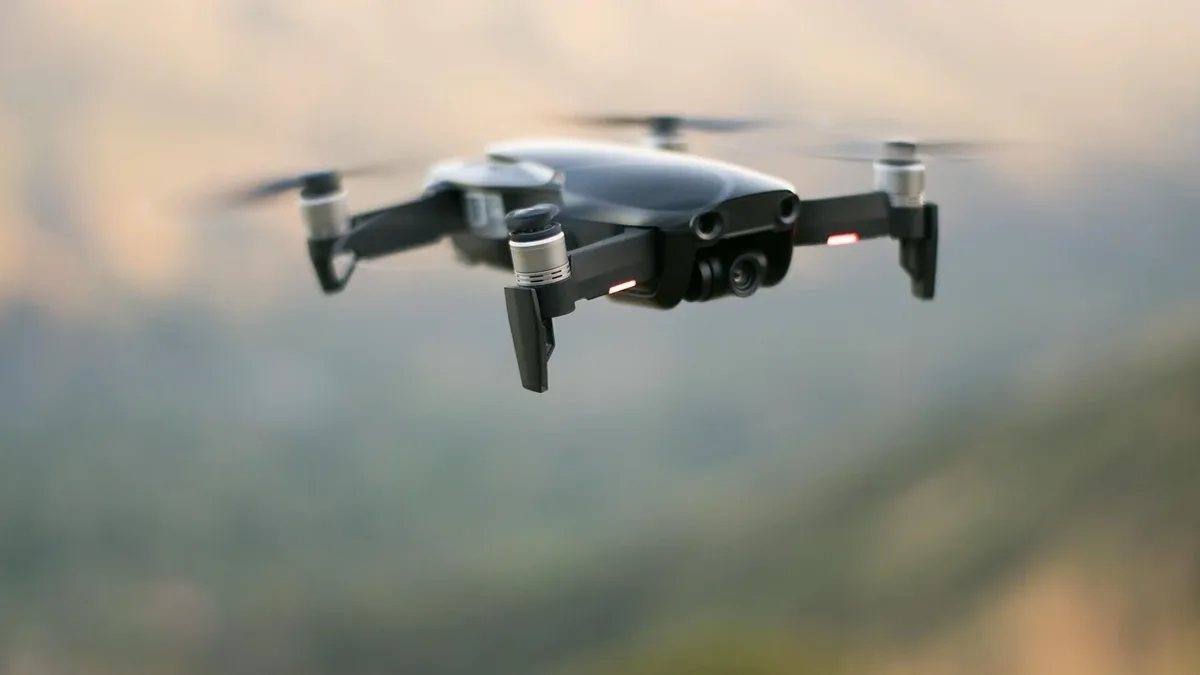
A drone can get you fined, grounded, or into court before you take a single good photo. The stakes are higher because the moment it leaves the ground, you are operating an aircraft in shared airspace, and the rules treat you like it, according to a report on Fstoppers.
Almost every serious beginner mistake is avoidable with a little knowledge. The legal specifics noted are United States FAA rules, though the underlying safety habits are universal.
Skipping Registration, TRUST, and Remote ID
Skipping this legal foundation is the fastest way to turn a hobby into a fine. In the United States, any drone weighing 250 grams or more must be registered with the FAA for $5, covering every recreational drone you own for three years. The registration number must be visible on the aircraft's exterior, and you must have proof of registration handy.
A registered drone also falls under the Remote ID requirement, transmitting identification and location data. The main exemption is staying entirely within an FAA-recognized identification area (FRIA) with the drone in sight. Standard Remote ID sends the drone's position and the controller's location, while a bolt-on module sends the drone's position and its takeoff point.
Recreational flyers must also pass The Recreational UAS Safety Test (TRUST). It is free, takes about thirty minutes online, and proof must be shown when flying. Recreational flyers are also expected to follow the safety guidelines of an FAA-recognized community-based organization.
None of this is optional. Remote ID lets the FAA and law enforcement check compliance, and violations can bring substantial civil penalties.
Assuming the Sub-250-Gram Rule Means You Are Clear
This traps beginners who try to do the right thing. An unregistered drone under 250 grams flown recreationally is exempt from registration and Remote ID. The exemption is based on actual takeoff weight, including the battery and any accessories, and that line is easy to cross.
Popular lightweight models sit right on the edge. A DJI Mini 4 Pro is under the limit in its standard configuration, but its extended-life battery pushes it over 250 grams. The DJI Mini 5 Pro is listed at 249.9 grams but has a manufacturing tolerance of plus or minus 4 grams, so an individual aircraft may already weigh more than 250 grams out of the box. An ND filter, propeller guard, or heavier battery can also push it over. If relying on the exemption, weigh your drone in its takeoff configuration. The exemption covers only registration and Remote ID, not the flight rules, which apply to everyone regardless of weight.
Flying in Controlled Airspace Without Checking
The sky is not open by default. Flying in controlled airspace near airports without authorization is dangerous and heavily penalized. In uncontrolled Class G airspace, you must stay at or below 400 feet above the ground. In controlled airspace, you must stay at or below the altitude the FAA authorizes. You must always yield to crewed aircraft.
Before you fly, check the airspace in an FAA-approved B4UFLY provider app like Airspace Link, AutoPylot, or Aloft's Air Aware. In controlled airspace, request authorization through LAANC where available, or through FAA DroneZone. Never assume a spot is legal because it looks empty; restricted airspace can be over quiet ground near small airfields.
Airspace clearance is not permission to be where you are standing. LAANC clears the sky, not the ground. Cities, counties, states, and the National Park Service set their own rules about launching, landing, and operating from the land they control. The Park Service generally prohibits launching, landing, or operating a drone from or on national park lands and waters.
Darkness adds its own requirements. For recreational flying, your community-based organization sets after-dark procedures and lighting. Under Part 107, you need night training and lights on the aircraft bright enough to be seen from three statute miles away. Flying in the dark without both is illegal and an easy way to lose the drone.
Believing "Just for Fun" Means No Rules
A surprising number of beginners think the rules only apply to commercial pilots. They do not. Recreational flyers operate under a specific set of federal requirements. The line between recreational and commercial is not simply about money. The FAA classifies a flight by its purpose.
If you fly to create material for a monetized channel, a business, a client, or any other nonrecreational use, the operation generally falls under Part 107. This requires a remote pilot certificate, not just the recreational TRUST test. The test is the purpose of the flight, not merely whether money changed hands. When a flight is purely for enjoyment, TRUST and the recreational rules apply. As soon as the reason for launch is business or earning from footage, the flight belongs under Part 107, which requires passing an aeronautical knowledge exam.